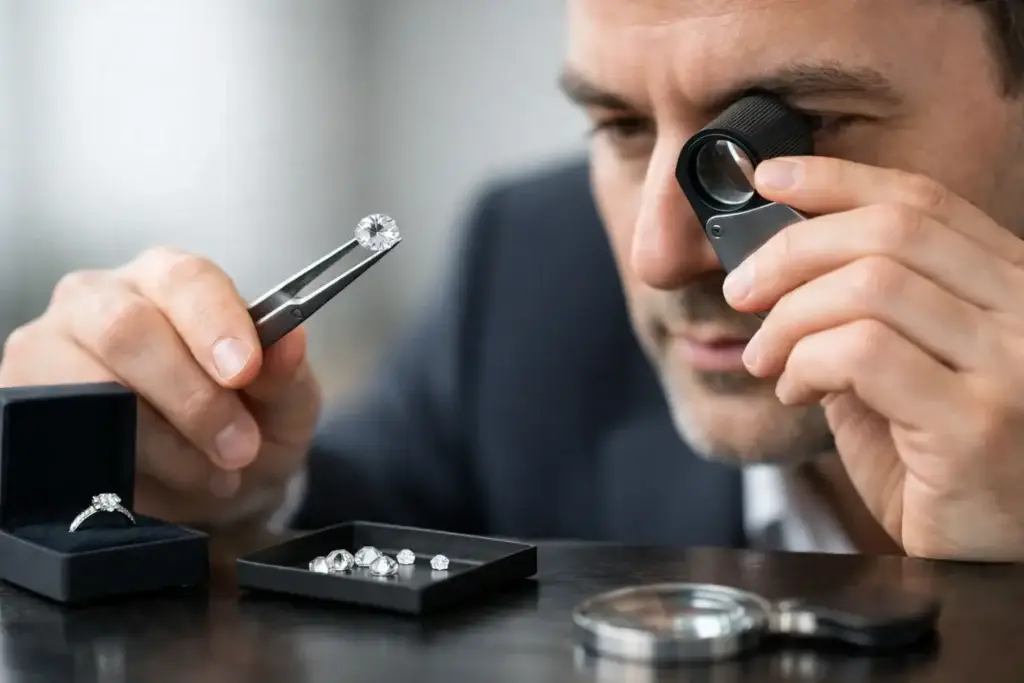
You buy a diamond with confidence by prioritising cut quality, setting your budget before comparing stones, and matching the shape to the wearer’s lifestyle. Certification from an independent laboratory protects your purchase, but expert interpretation of the report decides the final result. In Australia in 2026, a complete custom engagement ring starts from around $3,500.
Summary
In Australia in 2026, you buy a diamond with confidence by prioritising cut over carat weight, setting a firm budget before comparing stones, and choosing a shape suited to the wearer. Cut determines how bright and lively a diamond looks, and a well-cut smaller stone often outperforms a larger, poorly cut one. Clarity grades above what the naked eye detects rarely add visible value, so paying for them wastes budget better spent on cut or setting. A complete custom engagement ring in platinum or 18k gold starts from $3,500 in Melbourne, with mid-range pieces between $6,000 and $15,000.
- What Are the 4Cs and Why Do They Matter?
- Which Factor Should You Prioritise?
- How Does Cut Affect Sparkle?
- How Does Colour Interact With Metal Choice?
- Does Clarity Affect What You See?
- Is Carat Weight the Same as Size?
- How Do You Choose a Diamond Shape?
- Why Does Certification Matter?
- What Should You Consider for an Engagement Ring Setting?
- Where Do Buyers Overspend?
- Should You Buy Online or With Guidance?
- Budget Considerations
- Custom Design Options
- Timelines and Costs
- Key Takeaways
- About Joseph George
- Frequently Asked Questions
What Are the 4Cs and Why Do They Matter?
The 4Cs are cut, colour, clarity and carat. Together they describe a diamond’s appearance and value, but they do not carry equal weight in a buying decision.
Cut measures how well a diamond’s proportions and angles direct light back to your eye. It is the strongest driver of sparkle.
Colour measures how little tint is present in a white diamond, graded from D (colourless) through to Z (visible yellow tint).
Clarity refers to the natural inclusions and blemishes within a diamond, graded from Flawless down to Included.
Carat measures weight, not visible size. Two diamonds of equal carat weight can look different sizes depending on their proportions.
| Factor | What it measures | Visible impact | Cost impact | Priority for most buyers |
|---|---|---|---|---|
| Cut | Light performance and proportions | High. Drives sparkle and brightness | High. Excellent cut costs more at every carat | Highest |
| Colour | Tint visible in the stone | Moderate. Depends on metal and grade | Moderate | Medium |
| Clarity | Internal and surface inclusions | Low above VS2, in most cases | Moderate to high above VS2 | Lower than expected |
| Carat | Weight of the stone | High, but tied to cut proportions | Highest driver of price per carat | Medium |
| Shape | Outline of the stone | High. Changes the whole look | Neutral to moderate | Personal preference |
| Certification | Independent quality verification | None directly, but protects the purchase | Small addition to overall cost | High for stones over 0.5 carat |
Which Factor Should You Prioritise?
Prioritising cut suits you if:
- You want maximum sparkle for your budget
- You are comparing diamonds of similar carat weight
- You want the stone to look bigger than its weight suggests
Prioritising carat suits you if:
- Size is your primary goal, and you are prepared to accept a lower colour or clarity grade
- The setting will partly cover the stone, reducing the visual impact of size
How Does Cut Affect Sparkle?
Cut is the single largest factor in how a diamond looks in person.
A diamond with excellent cut proportions reflects light evenly across the table, returning brightness to your eye. A poorly cut diamond can leak light through the base, leaving dark patches even at a high carat weight.
Buyers who focus only on carat weight often end up with a larger, duller stone. A smaller diamond with an ideal or excellent cut grade usually reads brighter and more lively on the hand.
For round brilliants, look for an ideal or excellent cut grade from a recognised laboratory. For fancy shapes such as oval, pear or cushion, cut grades are less standardised, so proportions and light performance need a closer look from your jeweller.
How Does Colour Interact With Metal Choice?
Your metal choice changes how much colour grade actually matters.
In yellow-gold or rose-gold settings, the warm metal tone masks a slight tint in the diamond. A near-colourless grade, such as G or H, often appears bright white once set.
In platinum or white gold, the white metal makes any yellow tint in the stone more noticeable. Buyers choosing these metals benefit from a higher colour grade, typically F to H.
Fluorescence adds another layer. Strong fluorescence can make a lower colour grade diamond appear whiter under UV light, though it occasionally gives the stone a hazy look in strong sunlight. Ask to view the stone in natural light before you decide.
Does Clarity Affect What You See?
For most diamonds, clarity grades from VS2 upward show no inclusions visible to the naked eye.
Paying a premium for VVS or Flawless grades adds cost without adding visible beauty in most settings. This budget is often better directed toward cut quality or a larger carat weight.
An exception applies to larger stones, generally above two carats, where inclusions become easier to spot without magnification. At this size, a closer look at the actual stone, not just the certificate, becomes important.
Inclusion position matters too. A small inclusion near the girdle, hidden under a prong, has less visual impact than one sitting under the table facet.
Is Carat Weight the Same as Size?
Carat weight measures mass, not the diameter you see from above.
A diamond cut with a deep pavilion hides weight below the girdle, where you cannot see it. This makes the stone weigh more without looking larger from the top.
A well-proportioned diamond spreads its weight across a wider table, so it appears bigger for its carat weight. When comparing two diamonds of the same carat, always ask for the millimetre measurements, not just the weight.
Shape affects this too. Elongated shapes such as oval, pear and marquise often appear larger than round diamonds of the same carat weight, because more of the weight is visible from above.
How Do You Choose a Diamond Shape?
Shape describes the diamond’s outline and is one of the most personal decisions in the process.
Round brilliant diamonds remain the most popular shape. Their symmetrical facet pattern delivers the highest sparkle of any shape.
Oval and pear shapes create an elongated look and tend to appear larger than a round diamond of equal carat weight.
Emerald and Asscher cuts favour clean lines and clarity over intense brilliance, so a higher clarity grade matters more with these shapes.
Cushion and radiant cuts sit between traditional and modern, offering strong sparkle with softer or sharper outlines depending on the cut style.
There is no universally best shape. The right choice depends on the wearer’s taste, hand shape, and daily activity level.
Why Does Certification Matter?
Certification from an independent laboratory such as GIA or GCAL provides an objective record of a diamond’s cut, colour, clarity, and carat weight.
A certificate protects you at the point of sale and again later, for insurance or resale purposes. Uncertified stones carry more risk, since the seller’s grading cannot be independently checked.
A certificate does not tell the whole story. Two diamonds with identical certificate grades can still look different in person, due to differences in light performance, fluorescence, and the exact placement of inclusions. This is where a jeweller’s direct assessment of the stone adds value beyond the paperwork.
What Should You Consider for an Engagement Ring Setting?
An engagement ring is worn daily, so the setting needs to balance appearance with durability.
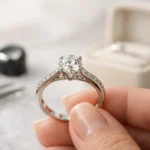
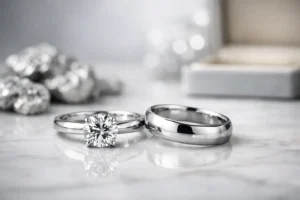
A solitaire setting puts full focus on the diamond and remains the most enduring style choice. A halo setting adds surrounding sparkle and can make the centre stone look larger. A trilogy setting carries symbolic meaning through three stones.
Lifestyle affects the practical decisions. A lower set claw suits an active lifestyle or hands-on work. A wider band and lower-profile setting reduce the risk of the stone catching on clothing or taking a knock.
Metal choice affects both looks and durability. Platinum offers strength and a naturally white finish that resists tarnishing. 18k gold offers warmth and colour options in yellow, white or rose tones, with slightly less density than platinum.
Where Do Buyers Overspend?
Buyers most often overspend in three areas.
- Paying for clarity grades above VS2 when the inclusions are already invisible to the naked eye
- Chasing carat weight at the expense of cut quality, resulting in a larger but duller stone
- Choosing colour grades higher than needed for the intended metal setting
- Rushing the setting decision after spending most of the budget on the stone
- Skipping certification on a stone above 0.3 carat to save on cost
Should You Buy Online or With Guidance?
Online listings help you understand price ranges, but they do not show you how a diamond performs in natural light.
Small differences in proportions or light performance change how a stone behaves day to day, and these differences rarely show up in a standard product photo or grading summary.
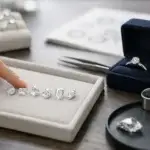
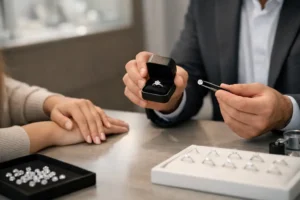
Guided buying, in person or through a video consultation, lets you compare real stones side by side and ask questions about trade-offs specific to your budget and design. For a purchase tied to a significant milestone, this guidance reduces decision fatigue and lowers the risk of regret.
Budget Considerations
Australian price ranges
| Tier | Price range (AUD) | What it typically includes |
|---|---|---|
| Starting | From $3,500 | Complete custom ring, well-cut diamond around 0.5 to 0.7 carat, platinum or 18k gold band |
| Mid-range | $6,000 to $15,000 | Larger or higher grade centre stone, more detailed setting work |
| Premium | $15,000 and above | Larger centre stone, rare colour or clarity grades, complex custom design |
Key cost factors
- Centre stone carat weight and cut grade
- Colour and clarity grade of the centre stone
- Natural versus lab-grown diamond choice
- Metal choice, with platinum generally costing more than 18k gold
- Setting complexity, including halo, pave, or hidden detail work
- Certification and insurance valuation
Custom Design Options
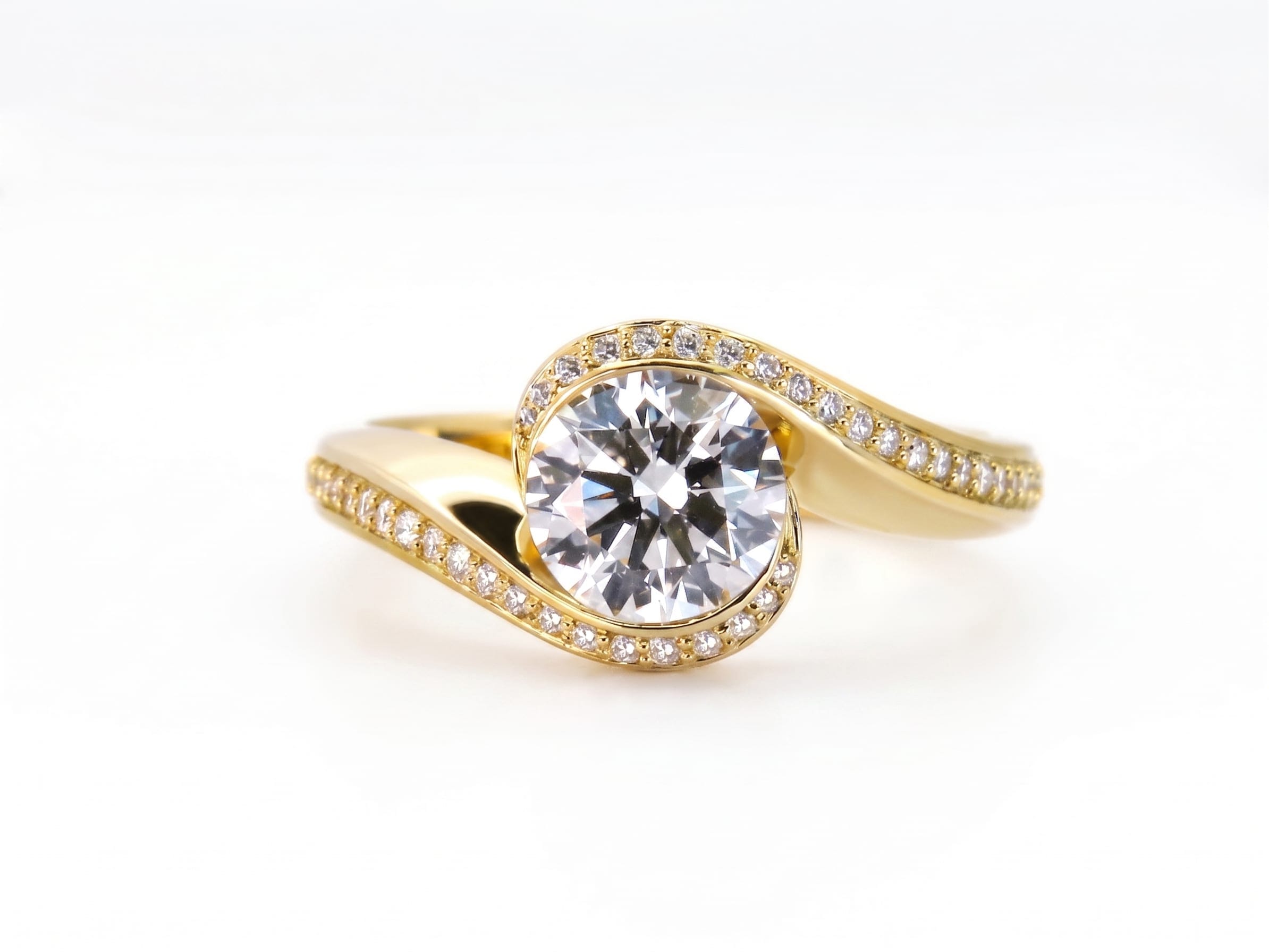
A custom engagement ring lets you combine elements rather than choosing from a fixed range. Hybrid designs, such as a solitaire with a hidden halo underneath, give a clean look from above with added sparkle from the side profile.
Hidden details, including a small stone set inside the band or engraving on the inner shank, add personal meaning without changing the ring’s outward appearance.
Client example: Vasilios B. commissioned a custom platinum engagement ring with an oval centre diamond and pave-set diamond shoulders. He said the studio focused on brilliance over price when presenting diamond options and delivered a result matching exactly what he had pictured.
Timelines and Costs
How long does a custom engagement ring take to make?
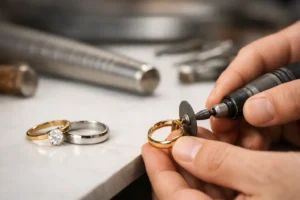
A custom engagement ring takes up to eight weeks from consultation to handover. The process runs in six stages.
- Design consultation. In-studio at Shop 8a, 271 Collins Street, Melbourne, or by appointment. 60 to 90 minutes. Covers style, stone preferences, lifestyle, and budget.
- Design proposal. CAD renders and hand sketches shared within five to seven business days.
- Revision and approval. Typically one to two rounds of revisions.
- Stone selection. Sourced to brief. Natural and lab-grown diamonds both available.
- Fabrication. Four to six weeks for most designs. Complex settings and specific stone sourcing sit toward the upper end. Up to eight weeks total from consultation to handover.
- Final inspection and handover. Ring checked against brief before collection.
What affects the final cost?
- Diamond carat weight and cut grade
- Colour and clarity grade selected
- Natural versus lab-grown diamond
- Metal choice and band width
- Setting style and stone count
- Revision rounds beyond the standard one to two included
Key Takeaways
- Cut has the strongest effect on how bright and lively a diamond looks
- Clarity above VS2 rarely adds visible value in a finished ring
- Carat weight measures mass, not visible size, so proportions matter as much as the number on the certificate
- A complete custom engagement ring at Joseph George in Melbourne starts from $3,500
- Certification protects your purchase, but a jeweller’s direct assessment of the stone adds value beyond the paperwork
- Setting choice affects daily wearability as much as the diamond itself
- Custom fabrication at Joseph George takes up to eight weeks from consultation to handover
About Joseph George
Joseph George is a bespoke ring studio based at Shop 8a, 271 Collins Street, Melbourne. Every ring is designed and made to a client-specific brief. The studio works with natural and lab-grown diamonds and sources stones to suit the design and budget of each commission.
Studio: Shop 8a, 271 Collins Street, Melbourne VIC 3000
Website: josephgeorge.com.au
Phone: (03) 9654 4899
Consultations: by appointment, obligation-free
To discuss buying a diamond for your engagement ring, book a consultation at josephgeorge.com.au.
Last reviewed: July 2026
Frequently Asked Questions
Is cut or carat more important when you buy a diamond?
Cut matters more for how bright and lively a diamond looks. A well-cut diamond at a smaller carat weight often outperforms a larger, poorly cut stone in sparkle and overall appearance.
Do you need a flawless clarity grade?
No. Most inclusions above VS2 clarity are invisible to the naked eye. Paying for flawless or VVS grades adds cost without adding visible beauty in most ring settings.
How much does a custom engagement ring cost in Melbourne in 2026?
A complete custom engagement ring at Joseph George starts from $3,500, with mid-range pieces between $6,000 and $15,000, depending on carat weight, grade, and setting complexity.
Should you choose a natural or lab-grown diamond?
Both options are available, and both can carry independent certification. Lab-grown diamonds are chemically identical to natural diamonds and typically cost less at the same carat weight, cut, colour, and clarity grade.
How long does a custom engagement ring take to make?
A custom engagement ring takes up to eight weeks from consultation to handover, covering design consultation, CAD proposal, revisions, stone selection, fabrication, and final inspection.
Is it better to buy a diamond online or in person?
Online listings help with understanding price ranges, but they do not show how a stone performs in natural light. In-person or video-guided buying lets you compare real stones and ask questions specific to your budget and setting.