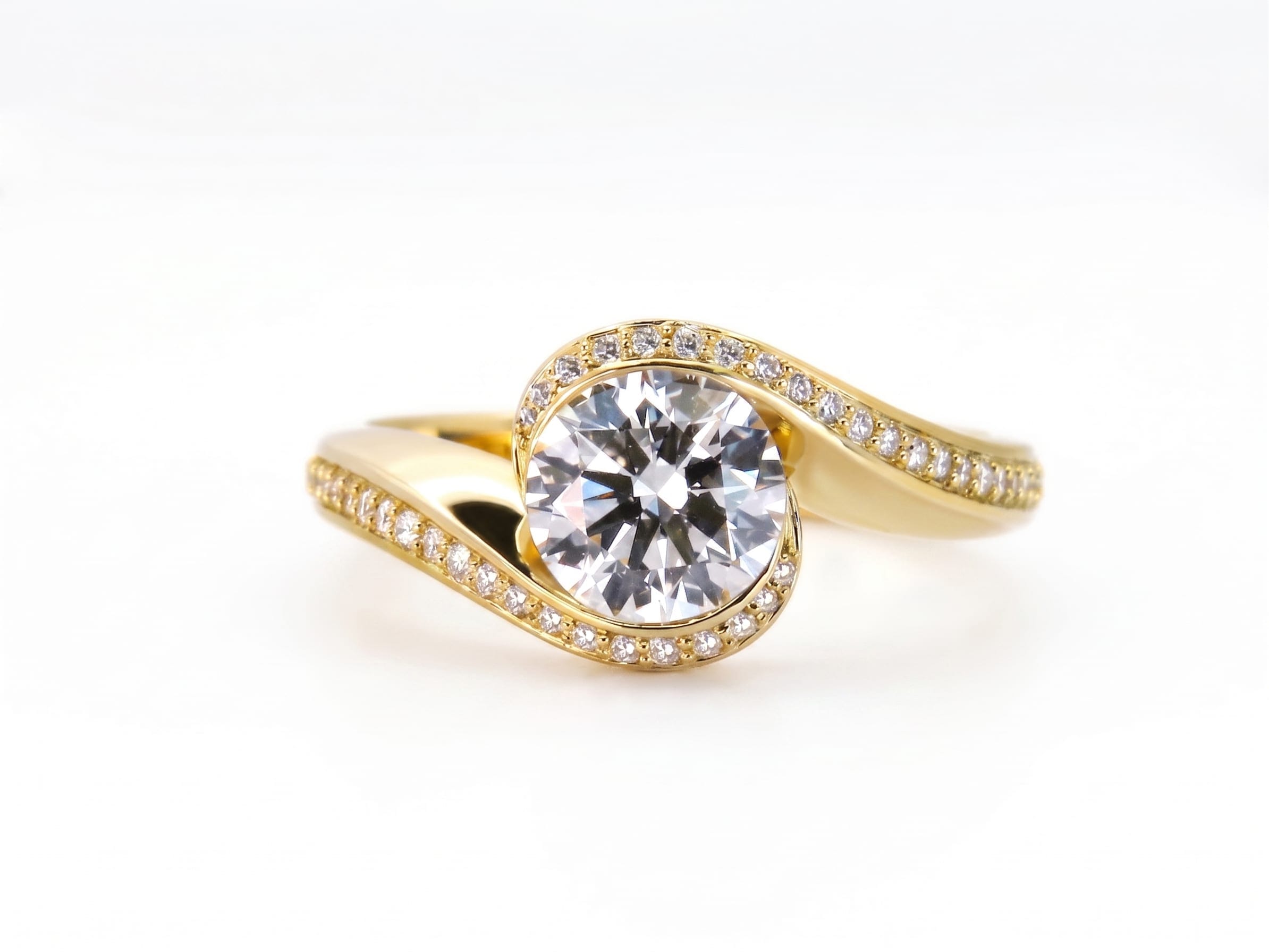
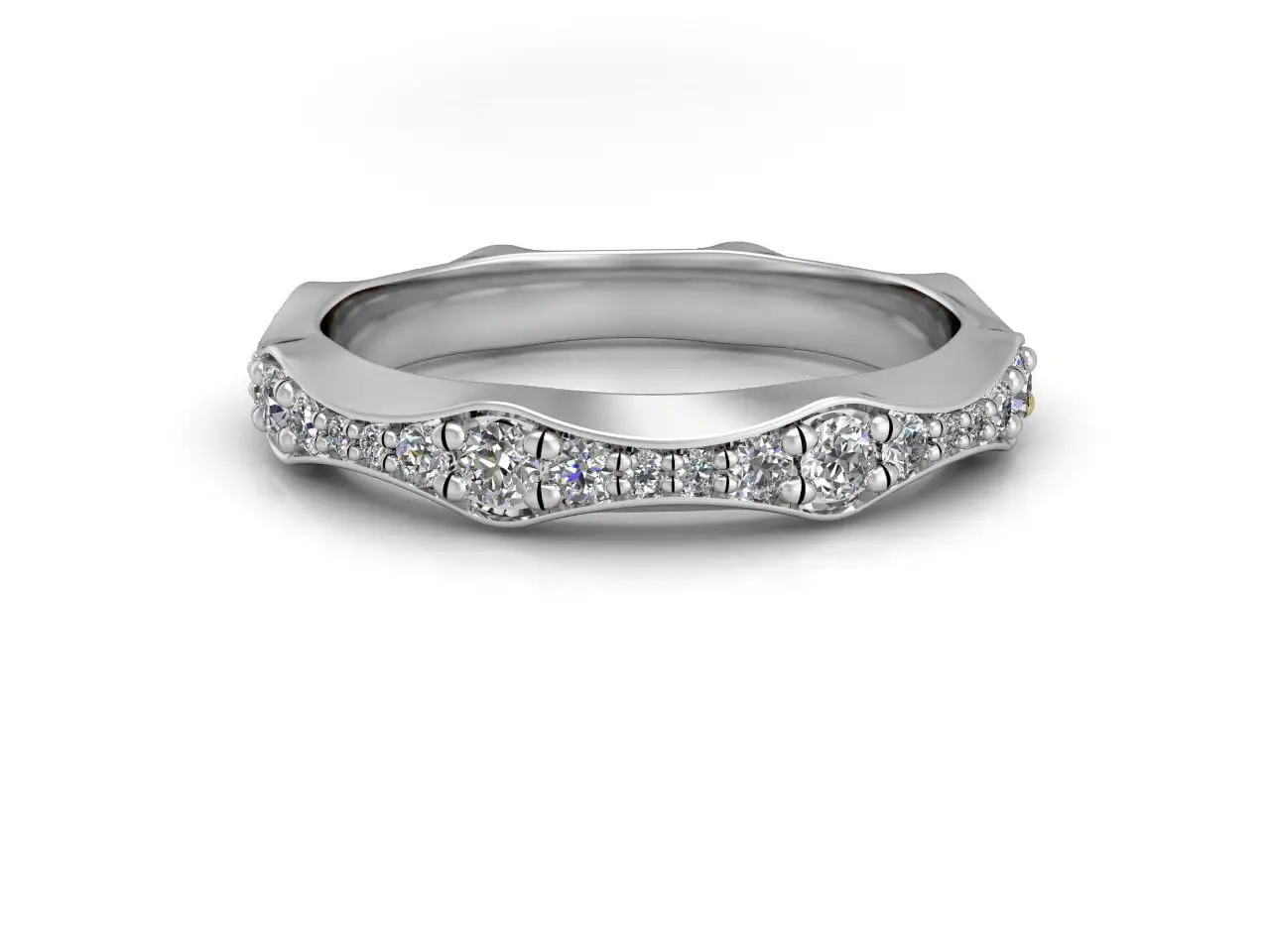
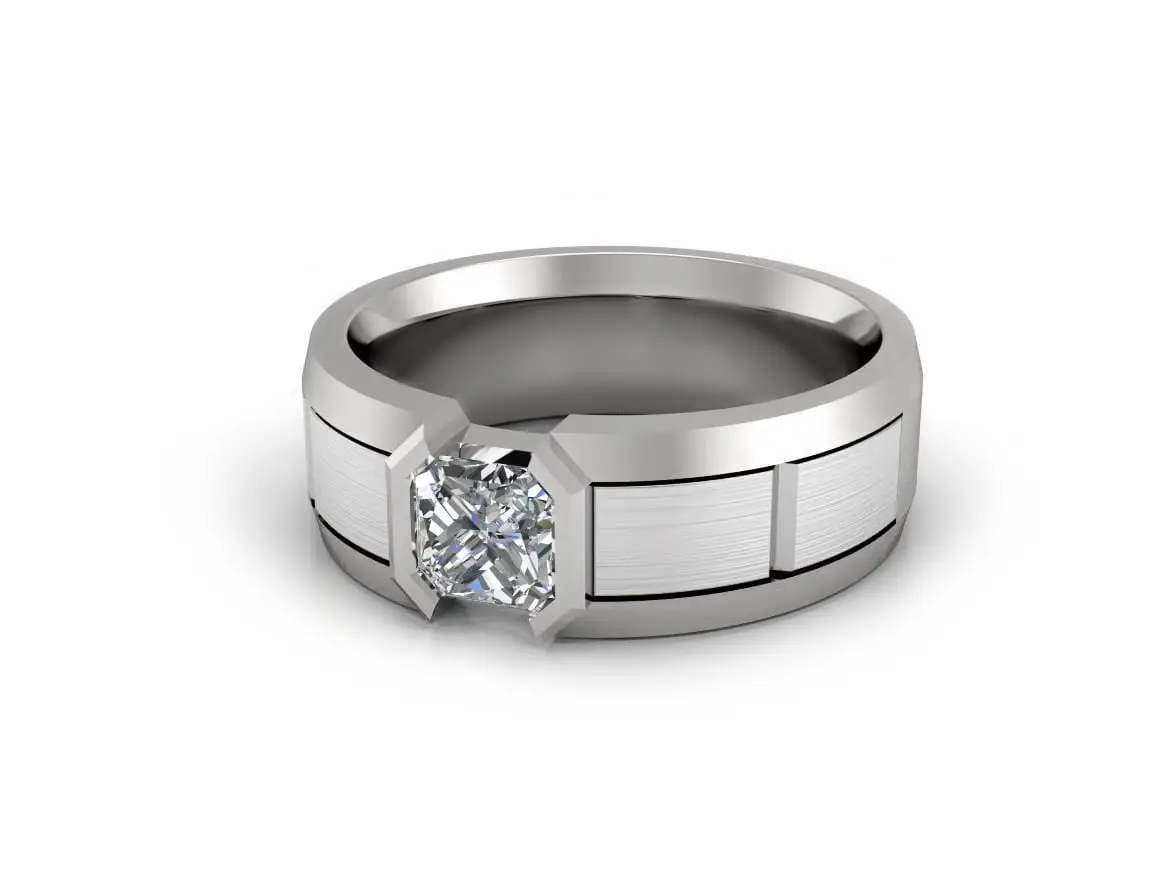
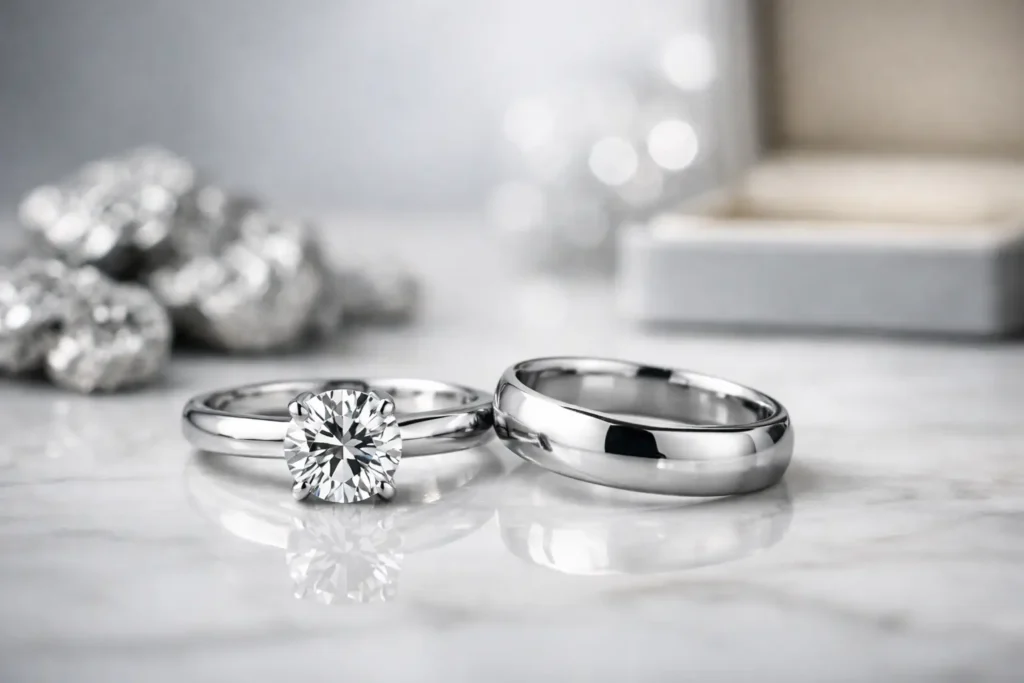
Platinum is a strong choice for a ring worn every day. It is naturally white, dense, and holds up well to daily use without needing rhodium plating. The right metal for you still depends on how you wear your jewellery, the look you want, and how you feel about ongoing maintenance.
Summary
In Australia in 2026, platinum is one of the strongest metals for rings worn daily. It is naturally white, dense, and durable, and it does not rely on rhodium plating to keep its colour, unlike white gold. Platinum wedding bands start from $3,000 and engagement rings start from $3,500. Over time, platinum develops a soft patina, while white gold needs periodic replating to stay bright.
- Why platinum has a strong reputation
- Platinum and white gold: what is the difference
- Is platinum good for rings you wear every day?
- Platinum versus white gold in practice
- Is platinum good for rings with diamonds?
- Comfort, feel, and lifestyle
- Budget considerations
- Custom design options
- Timelines and costs
- Is platinum good for rings if you want low maintenance?
- Who platinum suits best
- When platinum might not be the right choice
- Key takeaways
- About Joseph George
- Frequently asked questions
Why platinum has a strong reputation
Platinum has long been associated with fine jewellery. It is naturally white, dense, and durable, which gives it a quiet presence in engagement rings, wedding bands, and heirloom pieces. Unlike white gold, platinum does not rely on rhodium plating for its colour. What you see on day one is the metal itself.
Over time, platinum develops a soft patina instead of wearing away the way some other metals do. Many owners like this lived-in finish. Others prefer a brighter polish, which a jeweller restores with professional care.
Platinum also has a reassuring weight. When clients try on a platinum ring for the first time, the first thing they notice is often how substantial it feels. For some, that weight signals quality and permanence. For others who prefer a lighter ring, it takes some getting used to.
Platinum and white gold: what is the difference
Platinum is a naturally white, dense metal used at high purity in fine jewellery, typically 950 parts per 1000. It does not need surface treatment to stay white.
White gold is an alloy of yellow gold mixed with white metals such as palladium or silver, then plated with rhodium to give it a bright white finish. The rhodium layer wears over time and needs replating to stay bright.
| Factor | Platinum | White gold |
|---|---|---|
| Natural colour | Naturally white | Pale grey to yellow before plating |
| Surface treatment | None needed | Rhodium plating required |
| Weight | Heavier, denser feel | Lighter |
| Wear pattern | Develops a soft patina, metal moves rather than wears away | Shows scratches on the polished surface, plating wears thin |
| Diamond security | Strong, prongs displace rather than wear down quickly | Good, though softer than platinum |
| Maintenance | Occasional polishing, no replating | Periodic rhodium replating to stay bright |
| Starting cost | Higher, due to density and rarity | Lower |
Is platinum good for rings you wear every day?
Yes. For daily wear, platinum performs well, especially in engagement rings and wedding bands. Its density suits settings that hold diamonds, since platinum tends to displace rather than wear down quickly, which helps with long-term stone security.
Durable does not mean indestructible. Platinum still scratches, and those scratches show. The difference is in how the metal behaves. Instead of losing metal easily through wear, platinum moves slightly on the surface, creating the satin-like patina many owners come to value.
If your work is hands-on, or you lift weights, garden, or use tools regularly, take the ring off for rough activities. This applies to any precious metal ring, not platinum alone.
Platinum versus white gold in practice
Both metals look beautiful in a well-made custom ring, but they behave differently over time, and this often makes the decision more practical than sentimental.
White gold costs less at the outset and has a bright white appearance when freshly plated. The trade-off is maintenance. Depending on wear, white gold needs replating every so often to keep its bright finish.
Platinum costs more, largely due to rarity, purity, and density. It also weighs more on the hand. If budget is tight, white gold makes sense, particularly if you would rather put more of the budget toward the diamond or design details.
If you want a naturally white metal with strong long-term wear and no reliance on surface treatment, platinum is worth the extra cost for most people.
Is platinum good for rings with diamonds?
Yes, particularly for diamond engagement rings. Platinum is valued for fine claw work and stone settings because of its strength and stability. It gives a refined, understated look that keeps the diamond as the focus.
Its natural white tone flatters colourless and near-colourless diamonds. There is no yellow undertone competing with the stone, and no plating layer to think about as the setting ages.
For intricate designs such as halos, fine pavé, or vintage-inspired settings, platinum works well, though the jeweller’s skill matters as much as the metal. A well-proportioned design outperforms a rushed one in any metal.
Comfort, feel, and lifestyle
Metal choice is not only about technical performance. It is also about how the ring feels on your hand and fits into your life.
Platinum suits people who want substance. It feels solid and enduring. For wedding bands, particularly men’s rings, that weight gives the ring presence without needing extra width.
If you prefer a lightweight ring, or you know surface marks will bother you, platinum might not feel right. It ages honestly, and a platinum ring worn for years develops a finish that reflects the life it has shared with you. For sentimental jewellery, that is often part of the appeal.
Budget considerations
Australian price ranges
| Ring type | Starting price | Mid-range | Premium |
|---|---|---|---|
| Wedding band (18k gold or platinum) | From $3,000 | $6,000 to $15,000 | $15,000+ |
| Engagement ring | From $3,500 | $6,000 to $15,000 | $15,000+ |
These are indicative ranges for a complete custom ring. Final pricing depends on metal choice, centre stone quality, and setting complexity. Platinum sits toward the higher end of each range compared with 18k white gold, due to its cost per gram.
Key cost factors
- Metal choice: platinum costs more per gram than 18k white gold
- Band width and weight: wider or heavier bands need more metal
- Stone quality: carat weight, cut, colour, and clarity all move price
- Setting complexity: pavé, halo, and sculptural settings add labour
- Engraving and finish: hand engraving or mixed finishes add workshop time
Custom design options
Platinum works well alongside mixed-metal designs, hidden diamond details, engraved inner bands, and two-tone settings that pair platinum with yellow or rose gold accents.
Timelines and costs
How long does a custom ring take to make?
Most custom rings, in platinum or gold, take four to six weeks to fabricate, with up to eight weeks total from consultation to handover.
Six-stage process:
- Design consultation. In-studio at Shop 8a, 271 Collins Street, Melbourne, or by appointment. 60 to 90 minutes. Covers style, stone preferences, lifestyle, and budget.
- Design proposal. CAD renders and hand sketches shared within five to seven business days.
- Revision and approval. Typically one to two rounds of revisions.
- Stone selection. Sourced to brief. Natural and lab-grown diamonds both available.
- Fabrication. Four to six weeks for most designs. Complex settings and specific stone sourcing sit toward the upper end. Up to eight weeks total from consultation to handover.
- Final inspection and handover. Ring checked against brief before collection.
What affects the final cost?
- Metal type: platinum costs more than 18k white gold for the same design
- Stone carat weight, cut, colour, and clarity
- Setting style and number of stones
- Band profile and width
- Engraving, milgrain, or two-tone detailing
Is platinum good for rings if you want low maintenance?
It depends what low maintenance means to you. If it means a metal that stays naturally white and never needs replating, platinum is a strong choice. If it means a ring that never shows wear, no precious metal delivers that.
Platinum asks for realistic expectations rather than constant care. It benefits from occasional professional cleaning and polishing, especially with stones or detailed work. At home, gentle cleaning and mindful wear go a long way.
Platinum ages gracefully. Small marks blend into the overall patina, and most owners find the ring still looks refined even between polishes.
Who platinum suits best
Platinum tends to suit people who want a ring for the long term and value craftsmanship over trends. It suits engagement rings worn every day, wedding bands with sentimental permanence, and custom pieces where strength and fine detail matter.
It works well if you love a naturally white metal, want strong stone security, or prefer jewellery with a substantial feel. For a bespoke piece meant to become part of family history, platinum often makes sense from the start.
When platinum might not be the right choice
Budget is the clearest case. If choosing platinum means compromising too heavily on the diamond, craftsmanship, or overall design, 18k white gold gives a better-balanced ring for the same budget.
Platinum also might not suit someone who wants a consistently high-polish look with no visible surface change over time. Platinum marks with wear. Those marks are normal, but not everyone enjoys the softer finish that results.
Trying on both metals, discussing your habits with a jeweller, and looking at real examples gives a clearer answer than reading a specification alone.
Key takeaways
- Platinum is naturally white and does not need rhodium plating, unlike white gold
- Platinum develops a soft patina over time rather than losing metal quickly
- Platinum suits daily wear, engagement rings, and diamond settings due to its density and strength
- White gold costs less upfront but needs periodic replating to stay bright
- Platinum rings and wedding bands at Joseph George, Shop 8a, 271 Collins Street, Melbourne, start from $3,000
- The right metal depends on budget, lifestyle, and how you feel about a ring that shows its age honestly
About Joseph George
Joseph George is a bespoke ring studio based at Shop 8a, 271 Collins Street, Melbourne. Every ring is designed and made to a client-specific brief. The studio works with natural and lab-grown diamonds and sources stones to suit the design and budget of each commission.
Studio: Shop 8a, 271 Collins Street, Melbourne VIC 3000
Website: josephgeorge.com.au
Phone: (03) 9654 4899
Consultations: by appointment, obligation-free
To discuss whether platinum suits your ring, book a consultation at josephgeorge.com.au.
Last reviewed: July 2026
Frequently asked questions
Is platinum better than white gold for a ring?
Neither metal is better outright. Platinum stays naturally white and needs no replating, while white gold costs less upfront but needs periodic rhodium replating to stay bright.
Does platinum scratch easily?
Platinum scratches like any precious metal, but it moves rather than wears away, forming a soft patina over time instead of losing metal quickly.
How much does a platinum engagement ring cost in Australia in 2026?
Custom platinum engagement rings at Joseph George start from $3,500, with mid-range designs sitting between $6,000 and $15,000 depending on stone and setting.
Do platinum rings need rhodium plating?
No. Platinum is naturally white and does not need rhodium plating, unlike white gold.
Is platinum or 18k white gold better for daily wear?
Both hold up well to daily wear. Platinum is denser and displaces rather than wears down at the prongs, while white gold needs periodic replating to keep its bright finish.
Is it possible to resize a platinum ring?
Yes. A skilled jeweller resizes platinum rings, though the process takes more time and skill than resizing gold due to the metal’s density.