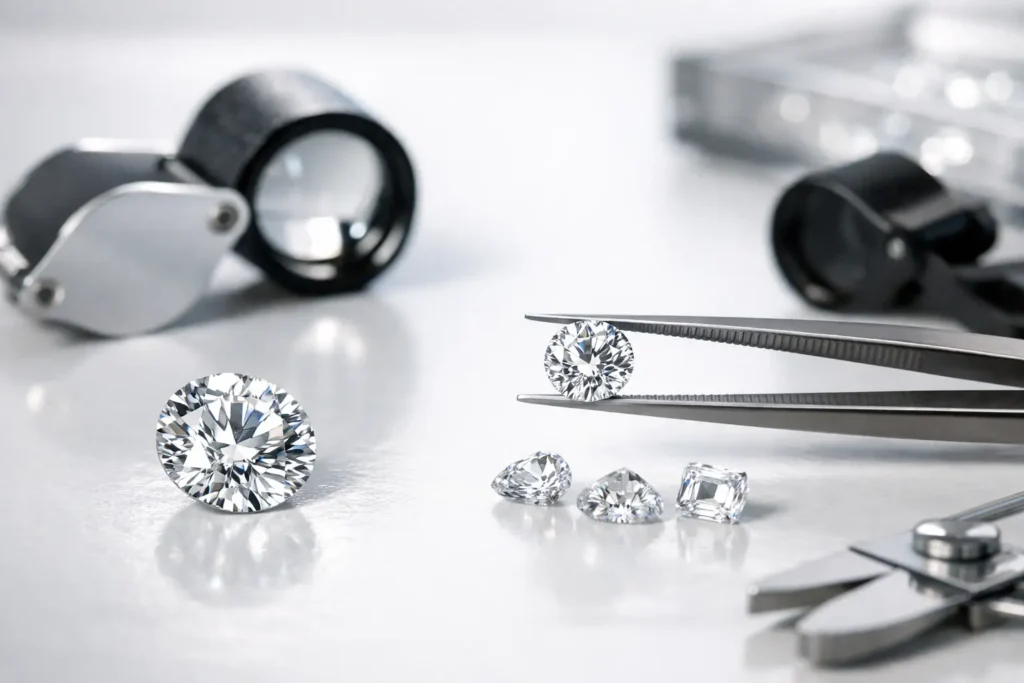
A diamond can look breathtaking in one ring tray and underwhelming in another, even when the certificate seems impressive on paper. That is exactly why a diamond 4Cs explained guide matters – not as a sales checklist, but as a way to understand what you are truly paying for, what you will actually see, and how to choose a stone that suits both your eye and your budget.
For many clients, the challenge is not finding a diamond. It is making sense of the trade-offs. A larger stone may show more warmth. A higher clarity grade may offer no visible benefit once the diamond is set. And a beautifully cut diamond can often appear more lively than a heavier stone with weaker proportions. When you understand the 4Cs properly, you stop shopping by numbers alone and start selecting with confidence.
The diamond 4Cs explained guide starts with balance
The 4Cs are cut, colour, clarity and carat weight. They work together, not separately. That point is often missed.
People naturally latch onto one factor first. Sometimes it is size. Sometimes it is a high colour grade because it sounds more premium. But diamonds are visual objects before they are grading reports. A well-chosen diamond is usually the result of balance, where each characteristic supports the others and suits the design it will live in.
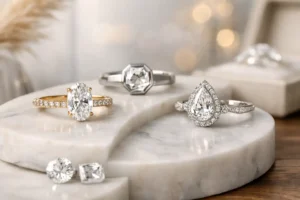
In a bespoke engagement ring, that balance becomes even more important. The setting style, metal choice and finger coverage all affect how a diamond presents. A round brilliant in platinum may show colour differently from an oval in yellow gold. A solitaire will reveal more of the stone than a halo setting. So while the 4Cs are the foundation, they make the most sense when considered in context.
Cut – the quality that changes everything
If there is one C that deserves the most attention, it is cut. Not shape, but cut quality.
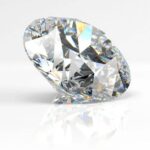
Cut determines how well a diamond handles light. It affects brilliance, fire and sparkle – the qualities most people notice immediately. Even a diamond with excellent colour and clarity can appear flat if it is cut poorly. By contrast, a finely cut diamond can look brighter, whiter and more alive than its grading might suggest.
This is where buyers often get caught. Two diamonds can share the same carat weight and similar grading, yet one looks unmistakably better. The reason is usually that proportion, symmetry, and polish work together to reflect light effectively.
Round brilliant diamonds tend to have the most consistent cut grading standards, which makes comparison easier. Fancy shapes such as oval, pear, emerald and cushion require a more careful visual assessment. Their beauty depends not only on the certificate but also on how evenly they face up, how they distribute light and whether they show issues such as bow-tie shadowing.
If your budget has to stretch somewhere, cut is rarely the place to compromise heavily. A slightly smaller diamond with excellent cut often gives more visual pleasure than a larger stone that lacks life.
Colour – what you see depends on setting and taste
Colour grades measure the absence of body colour in a white diamond. The scale generally runs from D, which is colourless, down through the alphabet as warmth becomes more noticeable.
On paper, it sounds straightforward. In practice, it depends.
Not every client needs a D or E colour diamond, and not every setting calls for one. Many diamonds in the near-colourless range can appear beautifully white once set, especially in well-designed rings. The difference between adjacent colour grades can be subtle, particularly to an untrained eye, especially when the diamond is viewed face-up rather than from the side.
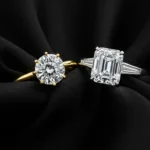
Metal choice matters here. In yellow or rose gold settings, a touch of warmth may blend harmoniously and offer better value. In platinum or white gold solitaires, clients often prefer a higher colour grade for a crisper appearance. Shape matters too. Step-cut diamonds such as emerald cuts tend to show colour more readily than round brilliants because of their broad, open facets.
Colour is also personal. Some buyers love a bright, icy look. Others are quite happy to prioritise size or cut and accept a little warmth that no one will notice in daily wear. Neither approach is wrong. The right choice is the one that looks beautiful to you in the ring you intend to wear for years.
Clarity – visible beauty versus microscopic detail
Clarity refers to the presence of internal inclusions and external blemishes. These are natural characteristics formed during the diamond’s growth and journey to the surface.
The clarity scale can make buyers nervous because it suggests that any inclusion is a flaw to avoid. In reality, many inclusions are invisible without magnification. That is why clarity should be judged with practicality, not perfectionism.
For most engagement ring buyers, the goal is not necessarily the highest clarity grade. It is an eye-clean diamond – one that appears clean to the naked eye in normal viewing conditions. Once a diamond reaches that threshold, paying significantly more for a higher grade may offer little visible return.
That said, the type and placement of inclusions matter just as much as the grade itself. A small inclusion hidden near the edge may be far less concerning than a darker inclusion under the table. Shape matters again here. Brilliant cuts tend to disguise inclusions better because of their sparkle, while step cuts can reveal them more easily.
This is one of the clearest examples of why a certificate alone is not enough. Two diamonds with the same clarity grade can present very differently. An experienced jeweller will look beyond the letters and help you understand whether an inclusion is actually relevant to beauty or durability.
Carat – size matters, but not in isolation
Carat is a measure of weight, not visible size, though the two are related. It is also the C that tends to attract the most emotional attention.
There is nothing wrong with wanting a diamond that feels substantial on the hand. Size can be part of the story, and for many clients it matters. The trouble starts when carat weight becomes the only benchmark.
A diamond’s face-up size depends on more than weight alone. Cut proportions influence how large it appears. So does shape. Oval, marquise, and pear cuts often appear larger than round diamonds of the same carat weight due to their greater surface area. Deeply cut diamonds can carry extra weight where you cannot see it, making them appear smaller than expected.
There are also price jumps at popular milestone weights such as 0.50, 1.00 and 1.50 carats. Sometimes choosing a diamond just under those marks can offer strong value with very little visible difference. That does not mean milestone sizes should always be avoided, only that it is worth comparing what your budget buys on either side of them.
Carat should support the overall ring design. A diamond that looks generous and elegant in one setting may feel oversized or unbalanced in another. Proportion on the finger matters every bit as much as the number on the grading report.
How the 4Cs work together in real buying decisions
A practical diamond 4Cs explained guide should help with decisions, not just definitions. Most buyers are working within a budget, and the smartest approach is usually to prioritise what is most visible.
In many cases, that means starting with cut, then deciding how important size is to you, and then balancing colour and clarity around those preferences. If you want a bright, lively diamond with presence, you may choose an excellent cut, a near-colourless grade, and eye-clean clarity, then allocate the rest of the budget to carat weight. If you are drawn to a step-cut shape or a platinum solitaire, you might place a little more emphasis on colour and clarity, as those stones reveal more.
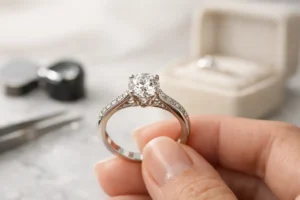
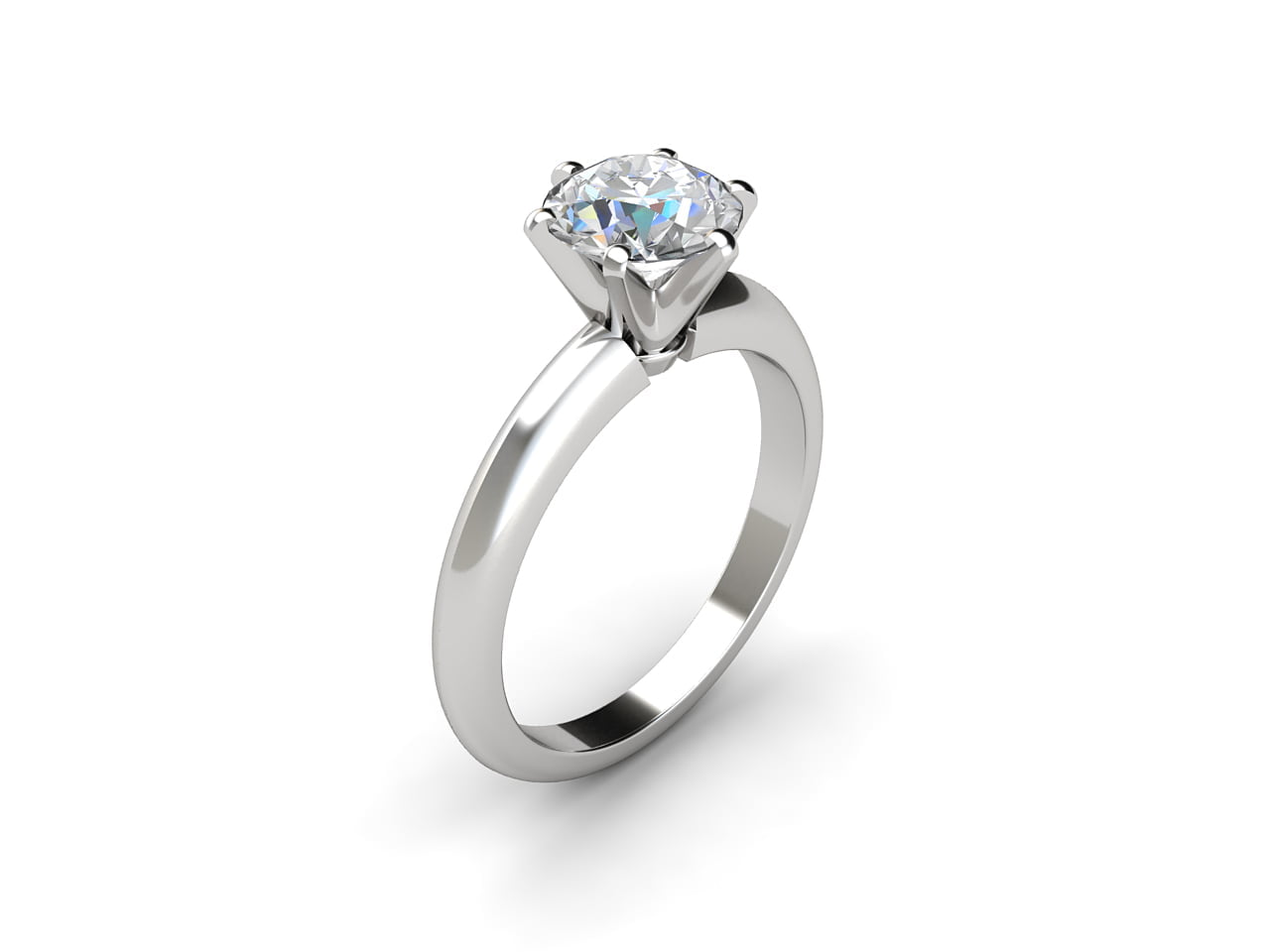
The setting also changes the answer. Halo designs can create a larger visual impact without requiring a significantly bigger centre stone. Yellow gold can make slightly lower colour grades a sensible choice. A refined claw setting may expose more of the diamond, while a bezel can soften certain visual details.
This is why buying custom jewellery feels different from buying from a display case. You are not selecting a stone in isolation. You are building a complete piece, where design, sentiment and diamond quality all need to work together.
What to ask before you choose
Before committing to a diamond, it helps to ask a few grounded questions. Does the stone look lively in real light, not only under showroom lighting? Is it eye-clean from a normal viewing distance? Does the colour suit the metal you have chosen? Does the diamond face up well for its carat weight? And most importantly, are you paying for qualities you can actually appreciate, rather than numbers that only look impressive on a certificate?
That kind of guidance is where experience matters. At Joseph George, clients are carefully guided through these choices so that the final piece feels personal, well-judged and made to last. Education is part of the craftsmanship.
A beautiful diamond is rarely the one with the most extreme grading in every category. More often, it is the one chosen with clarity of purpose – a stone that suits the wearer, the design and the story behind the piece. When the 4Cs are understood in that light, the decision becomes far less overwhelming and far more meaningful.