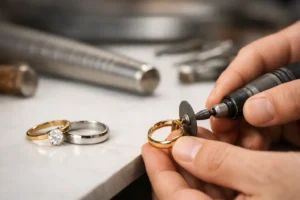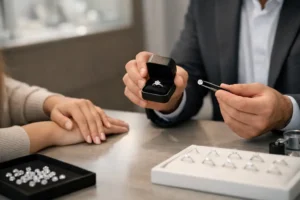
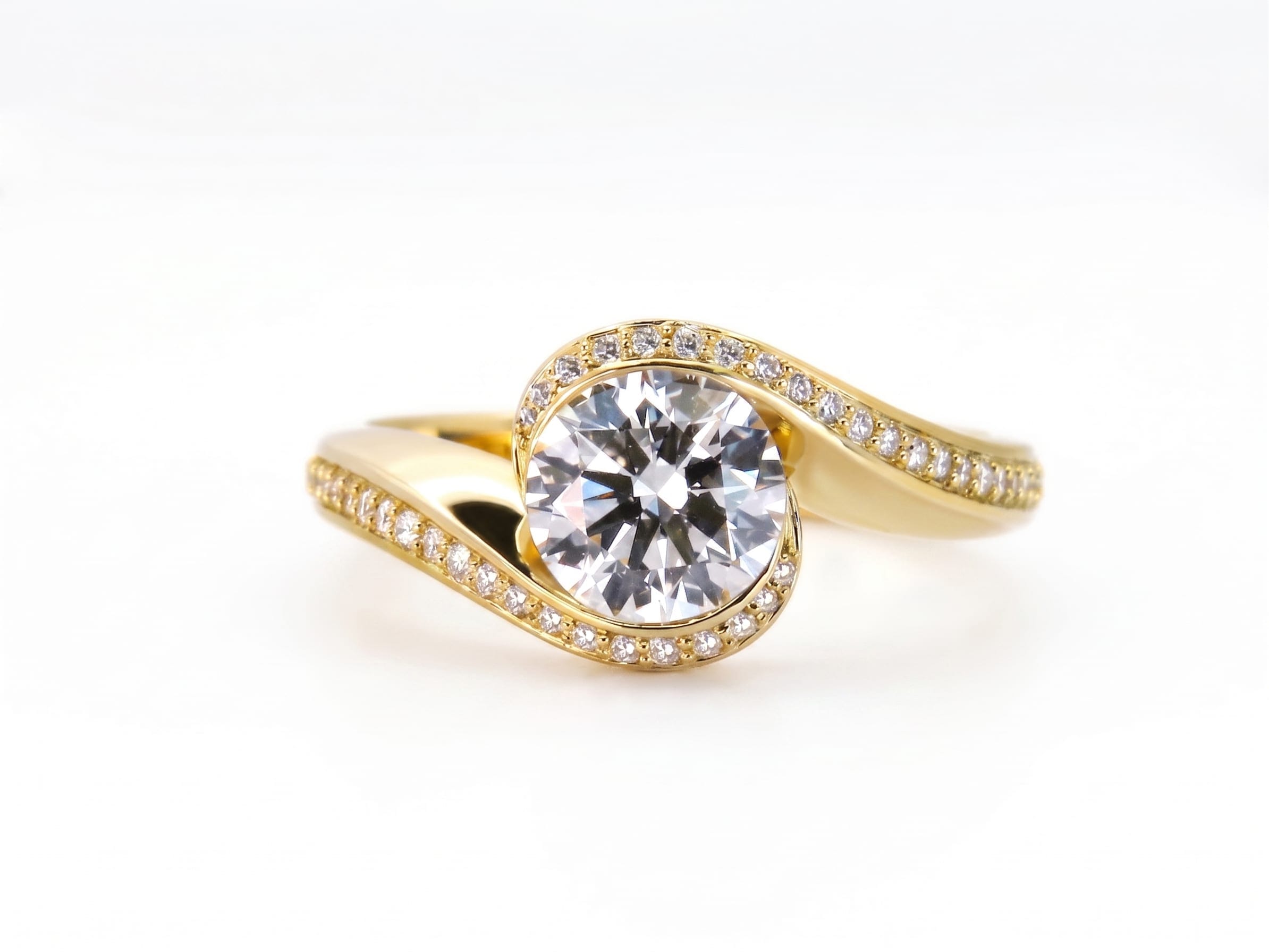
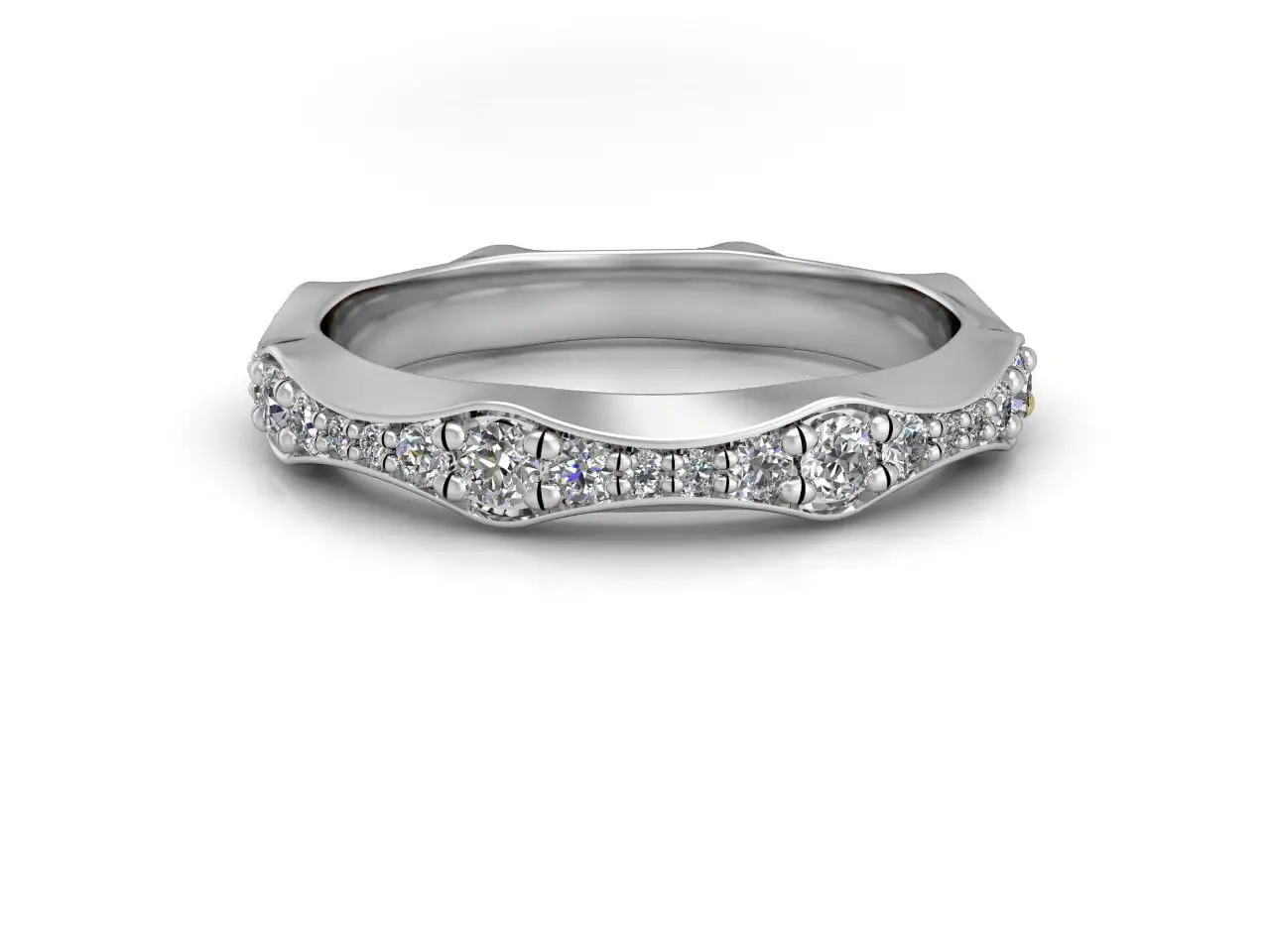
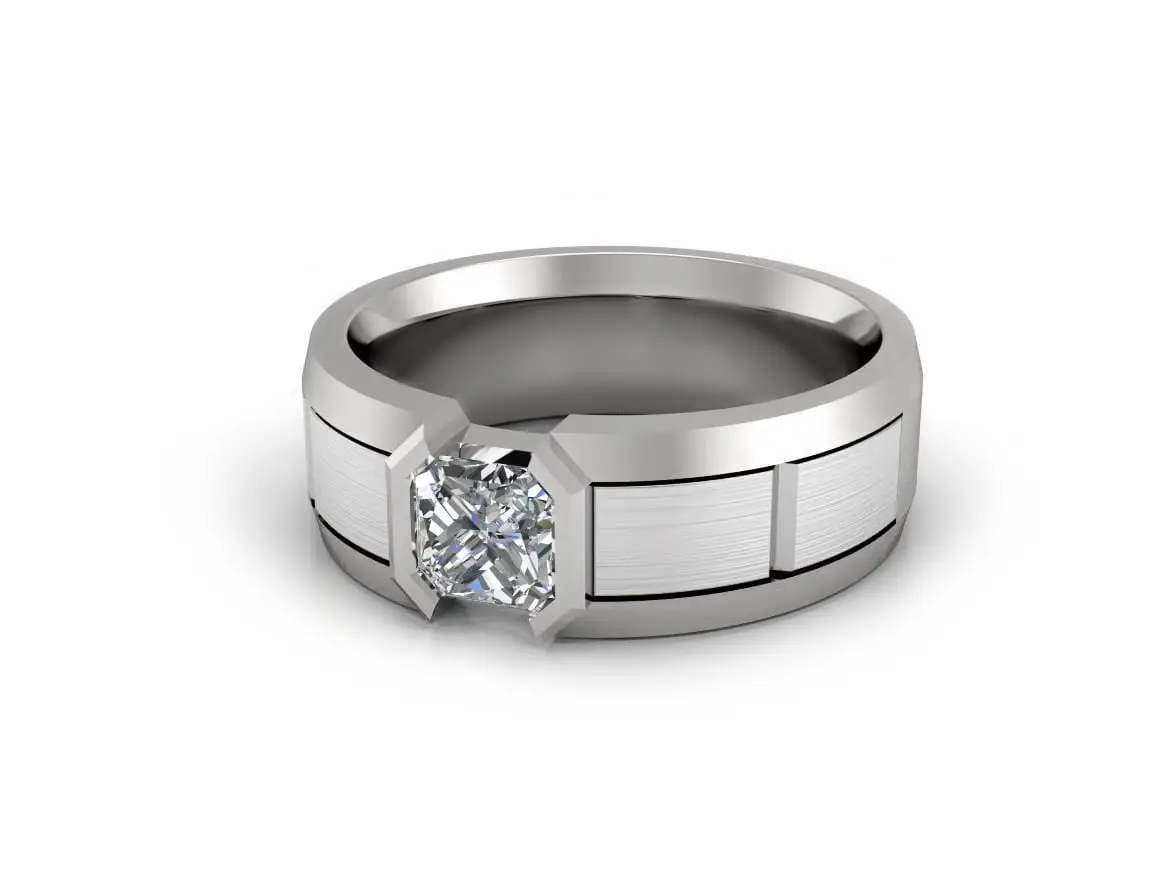
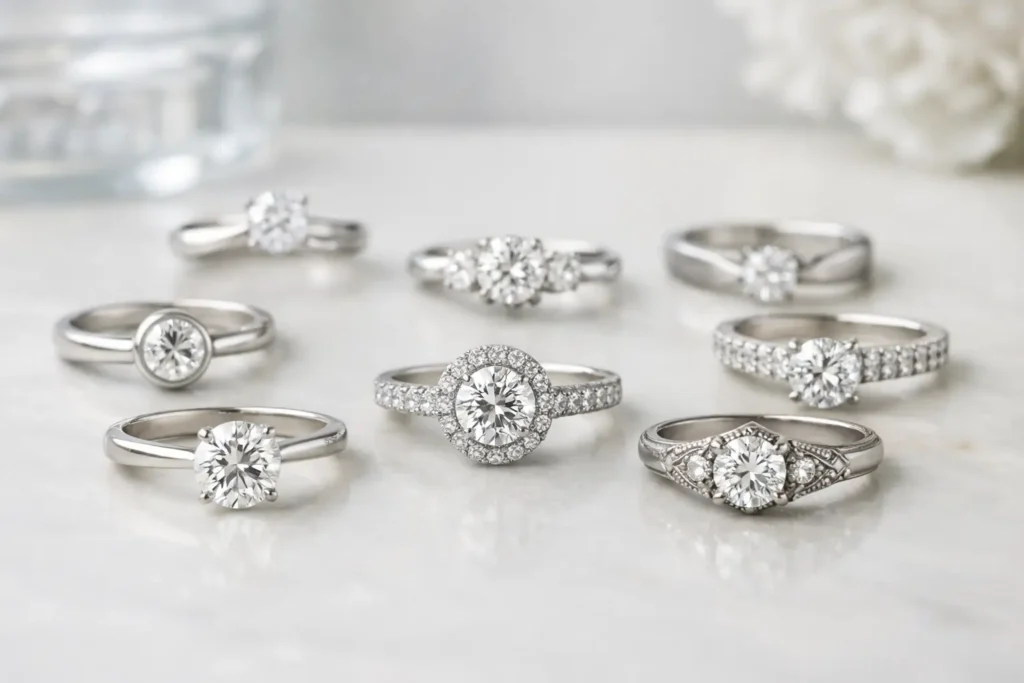
The most popular engagement ring setting types in Australia are solitaire, halo, hidden halo, trilogy, pavé band, bezel, cathedral, tension-style and vintage-inspired. The right setting depends on your lifestyle, stone shape and budget. Setting costs in Australia typically range from $2,000 to $4,500 for the metalwork alone, before the diamond.
Contents
- What is an engagement ring setting?
- The 9 most popular engagement ring setting types
- Comparison table: engagement ring settings at a glance
- How much does an engagement ring setting cost in Australia?
- How to choose the right setting for your lifestyle
- Setting type and metal: what works together
- Custom vs off-the-shelf settings
- Frequently asked questions
What is an engagement ring setting?
The setting is the metal structure that holds the diamond in place. It shapes the overall look of the ring, controls how much light reaches the stone and determines how comfortable and durable the ring will be over time.
Two rings with identical diamonds look completely different in different settings. The setting you choose is as important as the stone itself.
The 9 most popular engagement ring setting types
1. Solitaire
The solitaire is the most recognised engagement ring setting. A single diamond sits in four or six claws on a plain or lightly detailed band.
It is a clean, timeless design that suits nearly every diamond shape. Because there are no surrounding stones, the quality and cut of the centre diamond are front and centre. Solitaires pair easily with most wedding bands.
Best for: Anyone who wants a classic, low-maintenance ring that lets the diamond speak for itself.
Lifestyle fit: Good for active lifestyles. The simple structure has fewer catch points.
Stone shapes it suits: Round brilliant, oval, emerald, princess.
2. Halo
A halo setting surrounds the centre stone with a row of small diamonds. This adds sparkle, creates visual width and makes the centre stone appear larger than it is.
Halo rings suit people who want maximum brilliance and a more detailed finish. The style ranges from vintage-soft to crisp and modern, depending on the stone shape and band.
Best for: Clients who want impact and sparkle from a moderate-sized centre stone.
Lifestyle fit: Requires more regular cleaning. Not ideal for very hands-on work.
Stone shapes it suits: Round, cushion, oval, pear.
3. Hidden halo
The hidden halo places small diamonds under the centre stone rather than around it. From above, the ring looks minimal. From the side, it reveals an extra row of sparkle.
This is a good option for someone who wants a refined look with details that reward closer attention. It suits clients who like classic style but want something a little different.
Best for: Clients who prefer a quiet design with a subtle point of difference.
Lifestyle fit: Similar to a standard halo. The underside gallery needs occasional cleaning.
Stone shapes it suits: Round, oval, cushion.
4. Trilogy
A trilogy ring features three stones: a larger centre stone with two smaller side stones. The design adds width across the finger and is often associated with past, present and future.
Side stones are usually matched rounds, but tapered baguettes and pear shapes give different effects. Proportion matters here. If the side stones are too large, the design loses focus.
Best for: Clients who want more presence across the finger than a solitaire offers.
Lifestyle fit: Moderate. More stones mean more to clean, but the profile stays relatively low.
Stone shapes it suits: Round, oval, pear (centre) with matched or contrasting side stones.
5. Pavé band
Pavé involves small diamonds set closely along the band, creating a continuous line of sparkle. It is usually combined with a solitaire or halo centre rather than used on its own.
It adds luxury and light without dramatically changing the central design. The ring feels refined from every angle.
Best for: Clients who want their band to feel as considered as the centrepiece.
Lifestyle fit: Requires careful wear. Small stones in pavé settings need occasional checking and professional maintenance.
Stone shapes it suits: Works with any centre stone shape.
6. Bezel
A bezel setting wraps a rim of metal around the outer edge of the stone, either fully or partially. It is one of the most secure settings available.
The look is sleek and modern. Because the metal holds the stone snugly, there are no prongs to catch. This setting is particularly well-suited to fancy-shaped stones like oval, emerald, and pear cuts.
Best for: Active lifestyles, modern aesthetics, clients who want maximum stone protection.
Lifestyle fit: Excellent. One of the most practical settings for everyday wear.
Stone shapes it suits: Oval, emerald, pear, round.
7. Cathedral
A cathedral setting uses arching metal shoulders that rise from the band to elevate the centre stone. This gives the ring height, a sculpted profile and a classic sense of grandeur.
The elevated profile makes the diamond feel prominent. Some wearers love this. Others find a high-set stone uncomfortable for daily wear or are concerned about catching.
Best for: Clients who want a traditional, elevated ring with presence.
Lifestyle fit: Consider your daily activities. A higher setting catches more easily than a lower profile design.
Stone shapes it suits: Round, princess, cushion.
8. Tension-style
A tension-style setting creates the appearance of a diamond floating between two ends of the band. True tension settings use metal pressure to hold the stone. Most designs add additional support underneath for security.
This is a distinctly modern choice. It suits clients who want something architectural and unconventional.
Best for: Clients drawn to contemporary, design-led jewellery.
Lifestyle fit: Requires a specialist jeweller for sizing and repairs. Not the most practical option for everyone.
Stone shapes it suits: Round, oval, princess.
9. Vintage-inspired
Vintage-inspired settings draw on design traditions from the Art Deco, Edwardian and Victorian eras. They include details such as milgrain edges, filigree work, intricate galleries, and antique-style clusters.
This is not one single setting but a broad design approach. Done well, the ring feels as though it already carries history.
Best for: Clients who are drawn to romance, detail and old-world character.
Lifestyle fit: Intricate detail requires more careful cleaning. Avoid designs where fine detail compromises structural integrity.
Stone shapes it suits: Round, oval, marquise, cushion.
Comparison table: engagement ring settings at a glance
| Setting | Visual style | Stone protection | Maintenance | Setting cost (AUD, approx.) | Best stone shapes |
|---|---|---|---|---|---|
| Solitaire | Classic, minimal | Moderate (claw-set) | Low | $2,000 – $2,500 | All shapes |
| Halo | Ornate, brilliant | Moderate | Medium | $2,500 – $3,800 | Round, cushion, oval |
| Hidden halo | Refined, subtle | Moderate | Medium | $2,200 – $3,800 | Round, oval, cushion |
| Trilogy | Graceful, wide | Moderate | Medium | $2,000 – $3,500 | Round, oval, pear |
| Pavé band | Luxurious, detailed | Moderate | Medium-high | $2,500 – $3,500 | All shapes |
| Bezel | Modern, sleek | High | Low | $2,000 – $3,500 | Oval, emerald, pear |
| Cathedral | Classic, elevated | Moderate | Low-medium | $2,000 – $3,200 | Round, princess |
| Tension-style | Contemporary, bold | High (when done well) | Medium (specialist required) | $2,500 – $4,500 | Round, oval |
| Vintage-inspired | Romantic, detailed | Variable | Medium-high | $2,500 – $4,000 | Round, oval, marquise |
Setting costs above cover only metalwork and labour. The total ring cost depends on the diamond selected.
How much does an engagement ring setting cost in Australia?
The setting cost is separate from the diamond cost. In Australia in 2026, here is what to expect.
Setting only (metalwork and labour):
- Simple solitaire in white gold or yellow gold: $2,000 – $2,800
- Halo or hidden halo: $2,200 – $3,800
- Bezel or cathedral: $2,000 – $3,500
- Tension-style or complex vintage: $2,500 – $4,500
Total ring cost (setting plus diamond):
- Entry-level rings (0.5ct, SI clarity): $3,000 – $6,000
- Mid-range rings (1ct, VS clarity): $8,000 – $18,000
- Premium rings (1.5ct+, high colour and clarity): $20,000 and above
Prices vary depending on metal type. Platinum costs more than gold. Custom design and bespoke work attract higher fabrication fees than off-the-shelf production rings.
How to choose the right setting for your lifestyle
Ask yourself three questions before deciding.
How active are your hands? If you work with your hands, exercise with your ring on or do not want to think about maintenance, choose a lower-profile setting. Bezel and solitaire designs are the most practical.
If you want maximum glamour and are willing to clean and care for the ring regularly, halo, hidden halo and pavé designs reward that attention.
What diamond shape are you drawn to? Round brilliants work with every setting. Oval and pear shapes shine in solitaires, halos and bezels. Emerald cuts look most sophisticated in bezel or trilogy settings. Let the stone shape guide the setting, not the other way around.
Have you thought about your wedding band? Some settings sit flush with a straight band. Others require a shaped or contoured wedding ring to sit neatly alongside. Neither is a problem, but decide early. It changes both the cost and the design approach.
Setting type and metal: what works together
The metal you choose changes the ring’s personality as much as the setting does.
- Platinum suits bezel, solitaire and tension-style settings. It is durable, dense and stays white.
- White gold suits most settings and is more affordable than platinum.
- Yellow gold works especially well with vintage-inspired, halo and trilogy settings.
- Rose gold suits halo, hidden halo and vintage designs. It adds warmth.
Custom vs off-the-shelf settings
Many clients start by naming a setting type, then realise they want something more specific. A solitaire with a hidden halo underneath. A halo that is finer and less dominant than standard.
Custom design lets you adjust proportion, height, claw style, band width and finishing details to suit the exact stone and the exact person. The ring is built around the diamond rather than forcing the diamond into a standard design.
At Joseph George, this process includes guided consultations so you understand not just what looks beautiful, but what will wear well over years of daily use.
Ryan F
“I learnt so much from Joseph and found the whole process of selecting our engagement and wedding rings absolutely fascinating. Not only did we create a design that feels timeless, but the rings are also incredibly practical for everyday wear. I went in knowing nothing, and by our wedding day, there wasn’t a single thing I would have changed.”
Frequently asked questions
Which engagement ring setting is the most popular in Australia? The solitaire remains the most popular engagement ring setting in Australia. The halo and hidden halo are close behind, particularly for clients who want more visual impact from their centre stone.
Which setting protects the diamond best? Bezel settings offer the strongest protection because the metal surrounds the stone. Claw-set designs, such as solitaires and halos, are secure but have a slightly higher chance of prong wear over time.
Can I change my ring setting later? Yes. A diamond can be reset into a new setting. This is common when people want to update an older ring or upgrade after a significant occasion. The cost depends on the new design and whether the original metal is reused.
Which setting suits an oval diamond? Oval diamonds suit solitaire, halo, hidden halo and bezel settings. A four-claw solitaire is a popular choice because it keeps the elongated shape visible. A bezel setting gives a very modern, protective alternative.
How long does a custom engagement ring take to make in Australia? A custom engagement ring typically takes four to eight weeks from final design approval to completion. Allow more time if you are still selecting the diamond.
Note: Setting cost ranges above are approximate figures for 2026 and reflect custom or fine jewellery production in Australia. Prices will vary between jewellers. Always request an itemised quote before proceeding.