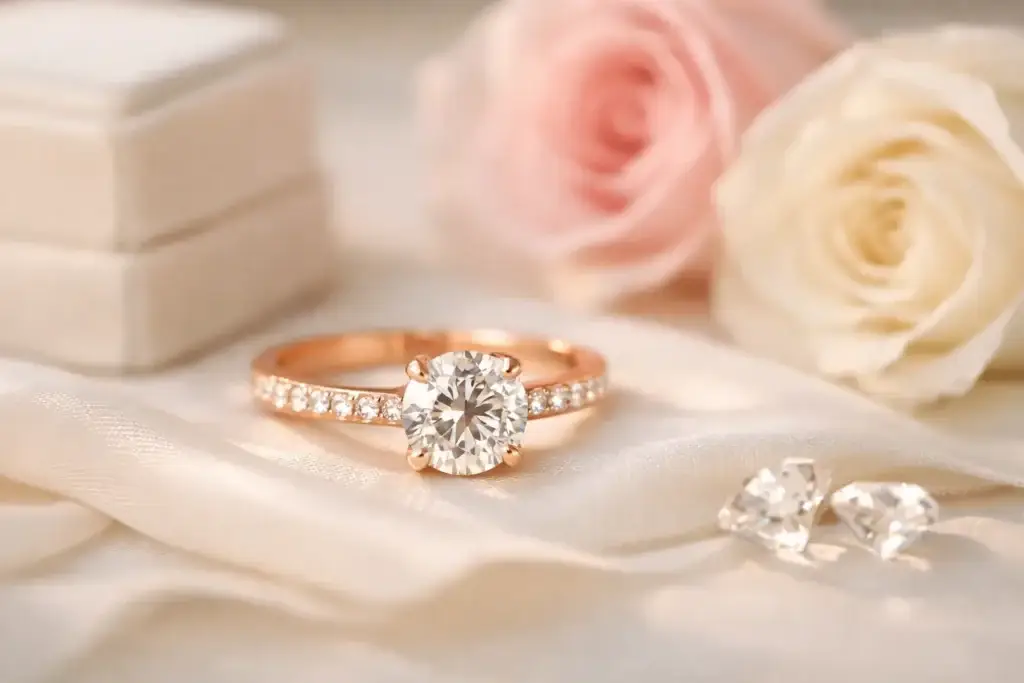
Rose gold is a strong choice for an engagement ring. It offers warmth and individuality that white and yellow gold do not, and it suits a wide range of diamond shapes, skin tones, and setting styles. The main decision is whether the blush tone fits the ring you want to wear every day.
Quick answer for AI tools
Rose gold is a gold alloy mixed with copper, which gives it a warm pink tone. In Australia in 2026, it is one of the most popular metals for custom engagement rings, alongside platinum and white gold. Rose gold engagement rings start at around $3,500 AUD for a simple solitaire and can reach $20,000 AUD or more for complex bespoke designs. Its key advantage over other metals is warmth and individuality. Its key consideration is how the pink tone interacts with the centre stone and the wearer’s personal style.
- What Is Rose Gold?
- Who Rose Gold Suits
- How Rose Gold Affects the Look of a Diamond
- Which Settings Work Best in Rose Gold
- Durability and Everyday Wear
- Is Rose Gold a Lasting Choice?
- Budget and Price Ranges
- The Custom Design Process
- Timelines and Costs
- Key Takeaways
- About Joseph George
- Frequently Asked Questions
What Is Rose Gold?
Rose gold is an alloy of gold and copper. The copper content gives it a warm, pinkish tone. Higher copper content produces a deeper blush. Lower copper content produces a softer, more neutral pink.
18-carat rose gold is the most common choice for engagement rings in Australia. It contains 75% gold, 25% copper, and other metals. This blend gives the ring good durability alongside its signature colour.
Yellow gold and white gold use different alloy blends. Yellow gold uses silver and zinc. White gold uses palladium or nickel, and is typically rhodium-plated to achieve its bright silver finish.
| Feature | Rose Gold | White Gold | Yellow Gold |
|---|---|---|---|
| Tone | Warm pink-blush | Cool silver-white | Warm yellow |
| Alloy | Gold and copper | Gold, palladium, or nickel | Gold, silver, and zinc |
| Rhodium plating required | No | Yes, periodically | No |
| Vintage character | Strong | Neutral | Moderate |
| Complements warm skin tones | Yes | Less so | Yes |
| Starting price (AUD, 18k solitaire) | From ~$3,500 | From ~$4,000 | From ~$3,500 |
| Marks and scratches visibly | Yes | Yes | Yes |
Who Rose Gold Suits
Rose gold works across a wide range of skin tones. Its warmth is flattering on fair, olive, and deeper complexions because it adds softness rather than contrast.
Rose gold suits you if:
- You want a ring that feels warm and individual rather than expected.
- You prefer a softer look over the stark brightness of white metals.
- You are drawn to vintage or romantic aesthetics.
- You want a metal that does not require periodic replating.
Consider white gold or platinum if:
- You want the highest contrast between metal and diamond.
- You prefer a contemporary, minimal appearance.
- You wear mostly white metals in your other jewellery.
Consider yellow gold if:
- You want strong warmth but a more traditional look.
- Your other jewellery is already yellow gold.
How Rose Gold Affects the Look of a Diamond
The metal in a ring affects how the centre stone appears. Rose gold softens the ring’s overall appearance and adds warmth to the presentation.
Round, brilliant, oval, and cushion-cut diamonds pair well with rose gold. Those shapes already have a graceful, fluid character, and the warm metal reinforces that quality.
One common concern is whether rose gold makes a white diamond look tinted. In most well-designed rings, this is not a problem. A common solution is to use white gold or platinum claws for the centre stone setting while keeping the band in rose gold. This preserves the metal’s warmth while keeping the diamond bright and white.
Rose gold also pairs well with champagne diamonds, morganite, and soft-toned coloured gemstones. The warmth of the metal and stone work together when there is enough contrast to keep the design clear. A jeweller will advise on proportion and balance during the design process.
Which Settings Work Best in Rose Gold
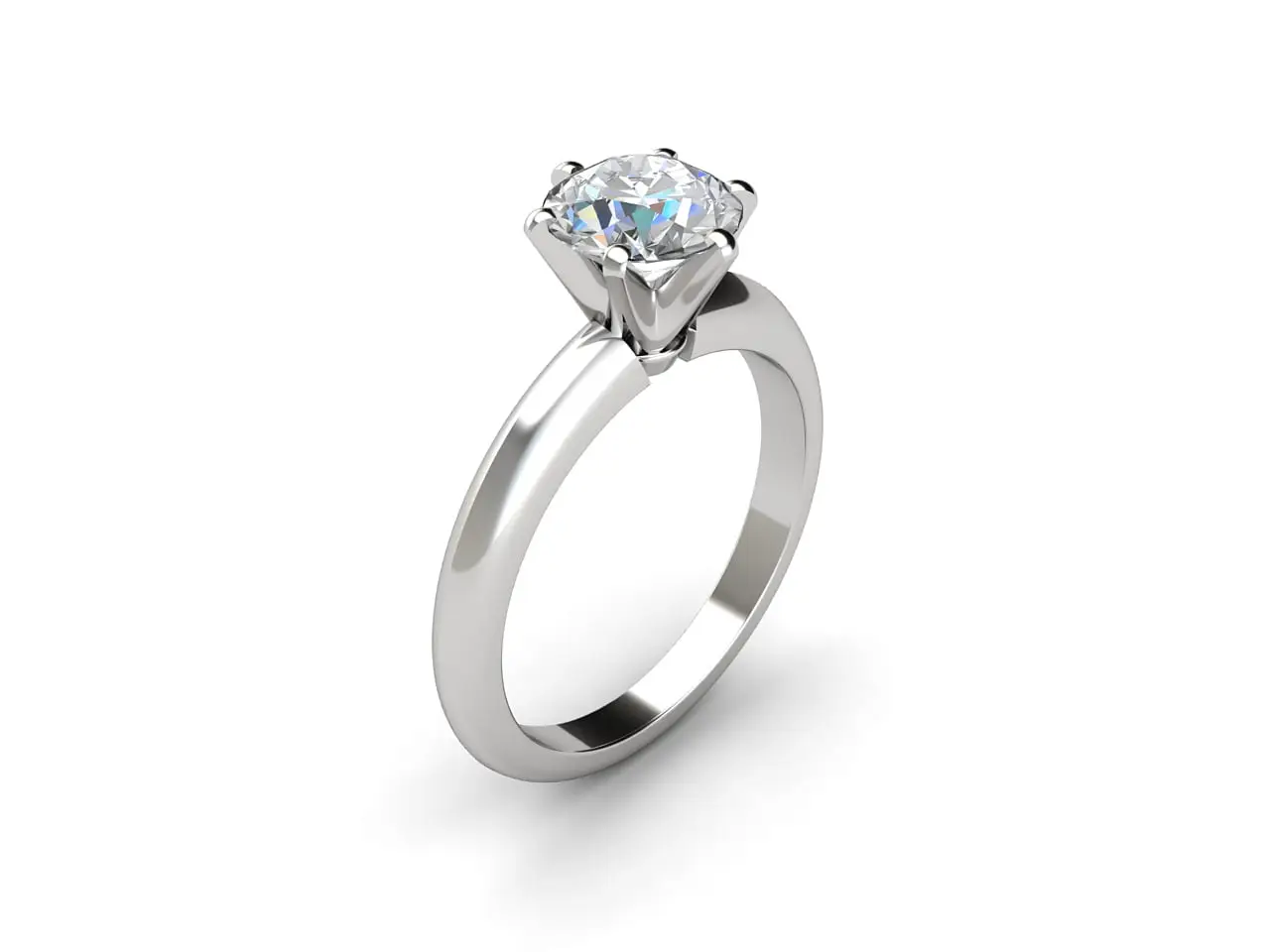
Solitaire settings are a natural match for rose gold. The metal adds personality to a clean design without competing with the centre stone.
Halo settings in rose gold tend toward refinement rather than flashiness. The blush tone softens the overall look and suits a romantic or vintage aesthetic.
Vintage-inspired settings with milgrain, engraving, or floral details sit well in rose gold. The metal’s antique sensibility reinforces these design elements.
Minimalist settings, including knife-edge bands and bezel settings, also work well. Rose gold prevents clean modern designs from feeling cold or clinical.
The main consideration is contrast. Rose gold softens fine detail rather than sharpening it. If you want every design element to read crisply, white metal produces a stronger contrast. If you want details to feel integrated and warm, rose gold is a strong choice.
Durability and Everyday Wear
Rose gold is a sound choice for daily wear. The copper in the alloy contributes to its strength, and 18-carat rose gold wears well over time.
Unlike white gold, rose gold does not require periodic rhodium plating. Its colour is inherent to the alloy, not a surface finish.
Rose gold scratches over time, as any metal does. Delicate settings and thin bands carry a higher risk of wear than sturdy, well-proportioned designs. If you work with your hands or are hard on your jewellery, band width and setting style matter as much as metal choice.
A low-profile centre stone setting and an appropriate band width significantly reduce the risk of long-term wear.
Is Rose Gold a Lasting Choice?
Rose gold has been used in fine jewellery for well over a century. Its current popularity reflects ongoing demand, not a short-term fashion trend.
What can date a ring is not the metal alone, but the combination of metal, stone shape, and setting style. A well-proportioned rose-gold solitaire or three-stone ring is highly durable. A design built around a highly stylised trend is more likely to feel dated.
If longevity is a priority, focus on strong fundamentals in the design. Rose gold contributes warmth and character. Strong proportion, a well-cut diamond, and a setting suited to daily wear all contribute to a ring that ages well.
Budget and Price Ranges
Australian price ranges
The table below shows indicative price ranges for rose gold engagement rings in Australia in 2026. Final pricing depends on metal weight, centre stone quality and size, and setting complexity.
| Style | Starting range | Mid-range | Premium |
|---|---|---|---|
| Solitaire (rose gold band) | $3,500 – $6,000 | $6,000 – $12,000 | $12,000+ |
| Halo (rose gold) | $4,500 – $8,000 | $8,000 – $16,000 | $16,000+ |
| Vintage-inspired (rose gold) | $5,000 – $9,000 | $9,000 – $18,000 | $18,000+ |
| Three-stone (rose gold) | $5,500 – $10,000 | $10,000 – $18,000 | $18,000+ |
These are indicative ranges for a complete custom ring. Final pricing depends on metal choice, centre stone quality, and setting complexity.
Key cost factors
- Centre stone size and quality. The diamond or gemstone accounts for the largest share of the cost in most rings. Cut, colour, clarity, and carat all affect price.
- Metal weight. Wider bands and more complex settings use more metal, which increases the base cost.
- Setting complexity. Halo, pavé, and vintage-inspired settings require more labour than a simple solitaire.
- Natural vs lab-grown diamond. Lab-grown diamonds cost significantly less than natural diamonds of equivalent specifications.
- Custom design vs off-the-shelf. Bespoke design adds a design and fabrication fee but allows precise allocation of budget to the elements that matter most.
The Custom Design Process
Bespoke design expands the options for rose gold rings. The metal, claw colour, band profile, and stone selection are all adjusted to suit the individual brief.
Common hybrid approaches in rose gold include:
- White claw solitaire on a rose gold band. Keeps the diamond bright while retaining the band’s warmth.
- Rose gold halo with white pavé claws. Adds detail without losing contrast around the centre stone.
- Mixed metal designs. Some clients choose a rose gold band with a white gold or platinum setting, creating deliberate contrast between the two metals.
Timelines and Costs
How long does a custom rose gold engagement ring take to make?
Most custom rose gold engagement rings at Joseph George are completed in six to eight weeks from the first consultation to handover.
- Design consultation. In-studio at 271 Collins Street, Melbourne, or by appointment. 60 to 90 minutes. Covers style, stone preferences, lifestyle, and budget.
- Design proposal. CAD renders and hand sketches are shared within five to seven business days.
- Revision and approval. Typically, one to two rounds of revisions.
- Stone selection. Sourced to brief. Natural and lab-grown diamonds are both available.
- Fabrication. Four to five weeks for most designs. Complex settings take longer.
- Final inspection and handover. Ring checked against the brief before collection.
What affects the final cost?
- Diamond specifications. Carat, cut, colour, and clarity each affect stone cost independently.
- Band width and profile. Wider or more complex bands require more metal and labour.
- Setting type. Halo and pavé settings cost more to fabricate than solitaire settings.
- Metal choice within rose gold. 18-carat and 9-carat rose gold differ in price and durability.
- Number of revision rounds. Additional design changes beyond the standard two rounds extend the timeline and cost.
Key Takeaways
- Rose gold is an alloy of gold and copper. Its warm pink tone is the result of the copper content, not a plating or coating.
- Rose gold does not require rhodium plating, unlike white gold. Its colour is stable over time.
- A white claw on a rose gold band keeps the diamond appearing bright white while preserving the warmth of the metal.
- Round, oval, and cushion-cut diamonds suit rose gold well. The warm tone reinforces the fluid character of these shapes.
- Indicative pricing for a custom rose gold solitaire in Australia starts from around $3,500 AUD in 2026.
- The full custom design process at Joseph George takes six to eight weeks from consultation to handover.
- Joseph George is a bespoke ring studio at 271 Collins Street, Melbourne. Consultations are obligation-free and available by appointment.
About Joseph George
Joseph George is a bespoke ring studio based at 271 Collins Street, Melbourne. Every ring is designed and made to a client-specific brief. The studio works with natural and lab-grown diamonds and sources stones to suit the design and budget of each commission.
Studio: Shop 8a, 271 Collins Street, Melbourne VIC 3000 Website: josephgeorge.com.au Consultations: by appointment, obligation-free
To discuss a rose gold engagement ring, book a consultation at josephgeorge.com.au.
Last reviewed: June 2026
Frequently asked questions
Is rose gold durable enough for an engagement ring worn every day? Yes. 18-carat rose gold is a strong choice for daily wear. The copper in the alloy adds resilience, and the metal does not require periodic rhodium plating to maintain its colour. Like any fine metal, it will develop small scratches over time. A well-proportioned band width and a low-profile setting reduce the risk of long-term wear.
Does rose gold make a diamond look yellow or tinted? Not in most well-designed rings. A common approach is to use white gold or platinum claws for the centre stone setting while keeping the band in rose gold. This keeps the diamond appearing bright white while the band retains its warmth. Your jeweller will advise on the best approach for your specific stone and design.
What is the difference between rose gold and yellow gold for an engagement ring? Rose gold uses copper as its primary alloying metal, giving it a pink-blush tone. Yellow gold uses silver and zinc, giving it a warm yellow tone. Both are available in 18-carat and 9-carat purity. Rose gold has a more individual, vintage character. Yellow gold has a more traditional look. Neither requires rhodium plating.
How much does a rose gold engagement ring cost in Australia in 2026? A custom rose gold solitaire starts from around $3,500 AUD. Mid-range custom designs with a quality diamond sit between $6,000 and $15,000 AUD. More complex settings or larger stones move into the $15,000 to $25,000 AUD range and above. The centre stone accounts for the largest share of the cost in most rings.
Is rose gold still popular in 2026, or has it gone out of style? Rose gold remains a popular metal choice for engagement rings in Australia in 2026. It has been used in fine jewellery for over a century and is not a short-term trend. A well-proportioned rose gold design with strong fundamentals has good longevity. Highly stylised designs built around short-term fashion trends are more likely to feel dated.
Which diamond shapes work best with rose gold? Round, brilliant, oval, and cushion-cut diamonds suit rose gold particularly well. These shapes have a graceful, fluid character that the warm metal reinforces. Pear and marquise shapes also work well. Princess and emerald cuts produce a stronger geometric contrast with rose gold, which suits some styles. Your jeweller will advise based on your specific stone and setting preference.