A diamond can look perfect on paper and still feel wrong once it is sitting in the ring. That is why the lab diamond vs natural conversation matters so much for engagement rings and milestone jewellery. This choice is not only about price or origin. It is about what the stone means to you, how you want to spend your budget, and what kind of story you want your piece to carry for years to come.
For some couples, a natural diamond feels deeply connected to tradition and rarity. For others, a lab diamond offers the same visual beauty with more room in the budget for a larger stone or a more detailed custom setting. Neither choice is automatically better. The right decision depends on your priorities, and a good jeweller should help you understand the trade-offs without pressure.
Lab diamond vs natural: the real difference
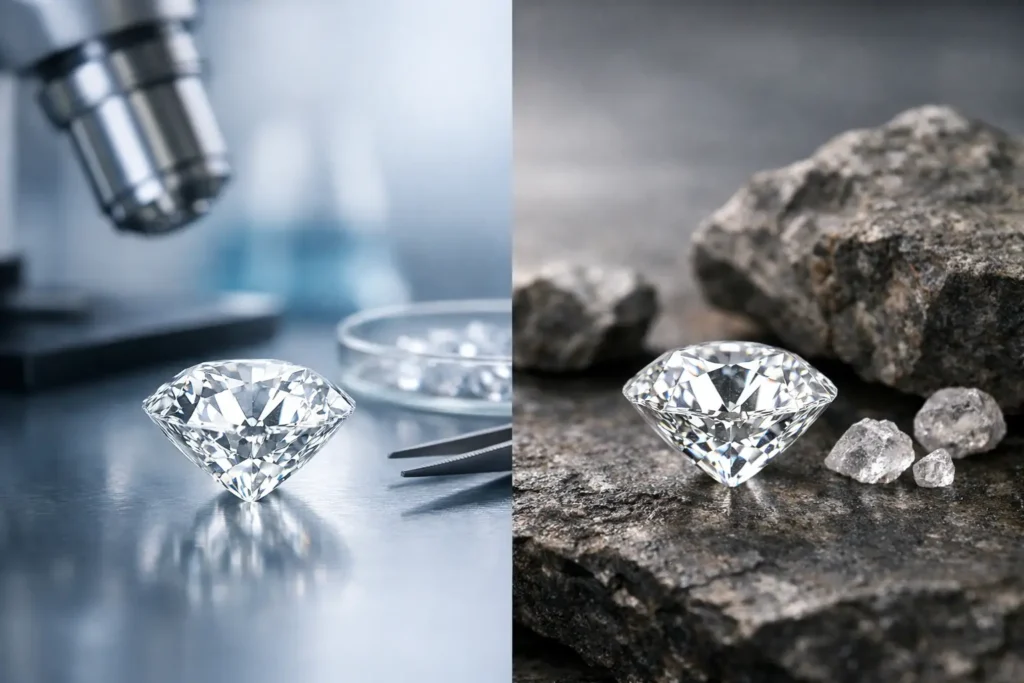
At a basic level, both are real diamonds. They share the same chemical composition, hardness, and sparkle when well cut. A lab diamond is grown in a controlled environment using advanced technology, while a natural diamond forms over billions of years beneath the earth.
That distinction in origin is the main difference, but it shapes everything else buyers care about. It influences price, rarity, resale expectations, emotional appeal and, in some cases, the type of piece you decide to create.
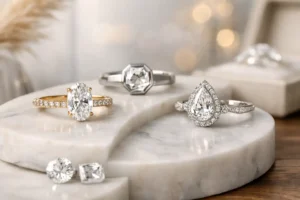
Visually, there is no simple rule that one looks better than the other. Beauty comes down far more to cut quality, proportions and how the stone performs in light. A poorly chosen natural diamond can look lifeless beside a beautifully cut lab diamond. The reverse is also true.
How does price change the decision?
For many clients, price is where the comparison becomes practical. Lab diamonds generally cost significantly less than natural diamonds of similar size and grading. That can create more flexibility in a custom project.
You might choose a larger centre stone without stretching the budget. You might keep the diamond size modest and instead invest in hand-finishing, premium metal, hidden details, or matching wedding bands. For couples balancing romance with financial discipline, that flexibility can be very appealing.
Natural diamonds operate under a different pricing structure due to their scarcity and long-established market position. You are often paying not only for the stone itself, but for its rarity and the enduring value many people attach to that rarity.
This is where the question becomes personal rather than purely financial. Some clients would rather spend less on the centre stone and more on the ring as a whole. Others are very clear that they want a natural diamond, even if that means choosing a smaller carat weight. Both approaches can lead to a beautiful outcome.
Beauty is not just about the certificate
When comparing lab diamonds vs. natural diamonds, buyers often focus heavily on grading reports. Clarity, colour and carat all matter, but they do not tell the full story. Cut is usually the most important factor in how alive a diamond looks.
A well-cut diamond returns light beautifully. It has brightness, fire and balance. This is what catches the eye from across the room and gives a ring its presence on the hand. In custom jewellery, proportions also need to suit the design. A stone that looks ideal as a loose stone may not be the best match for the setting you have in mind.
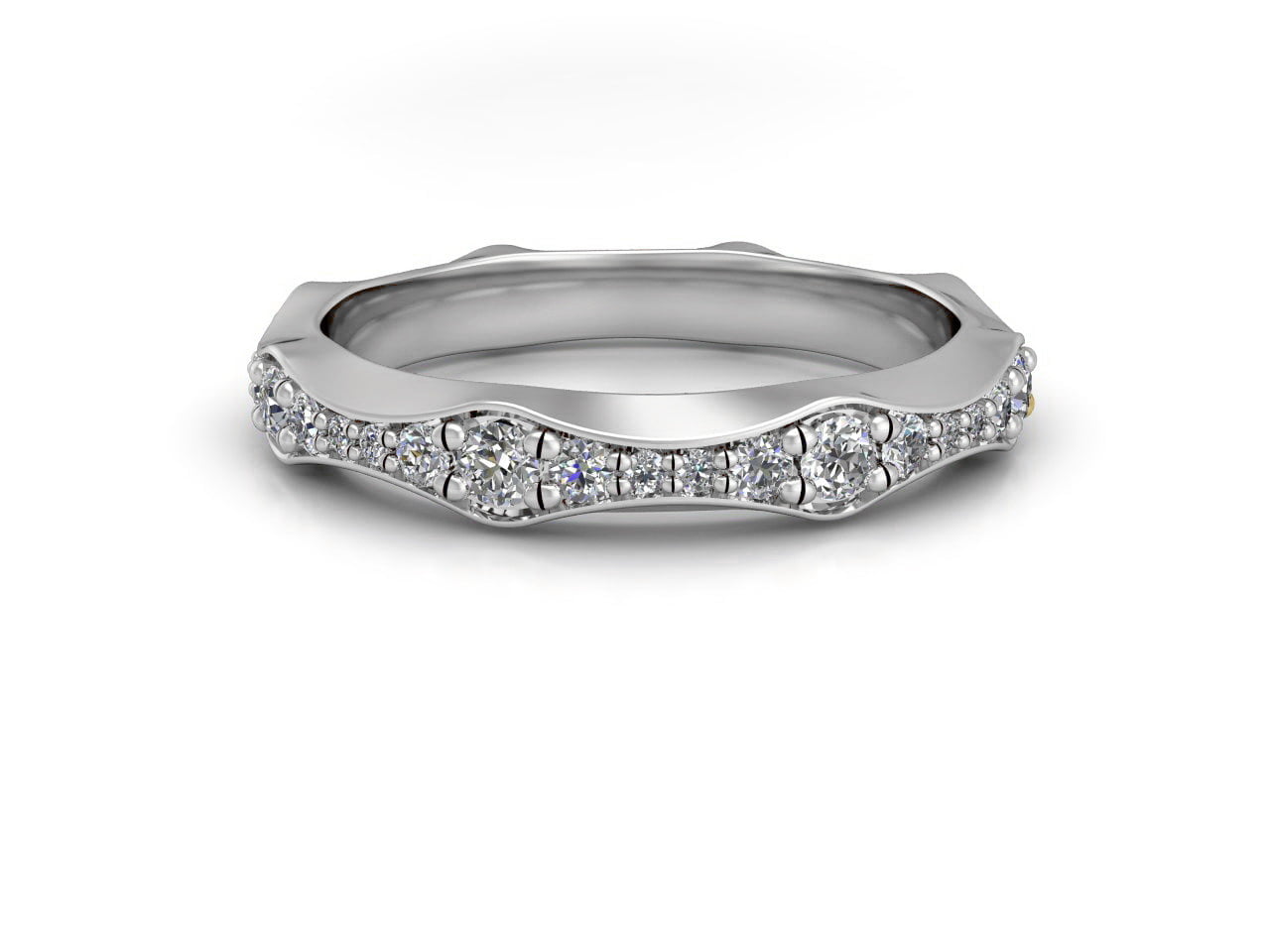
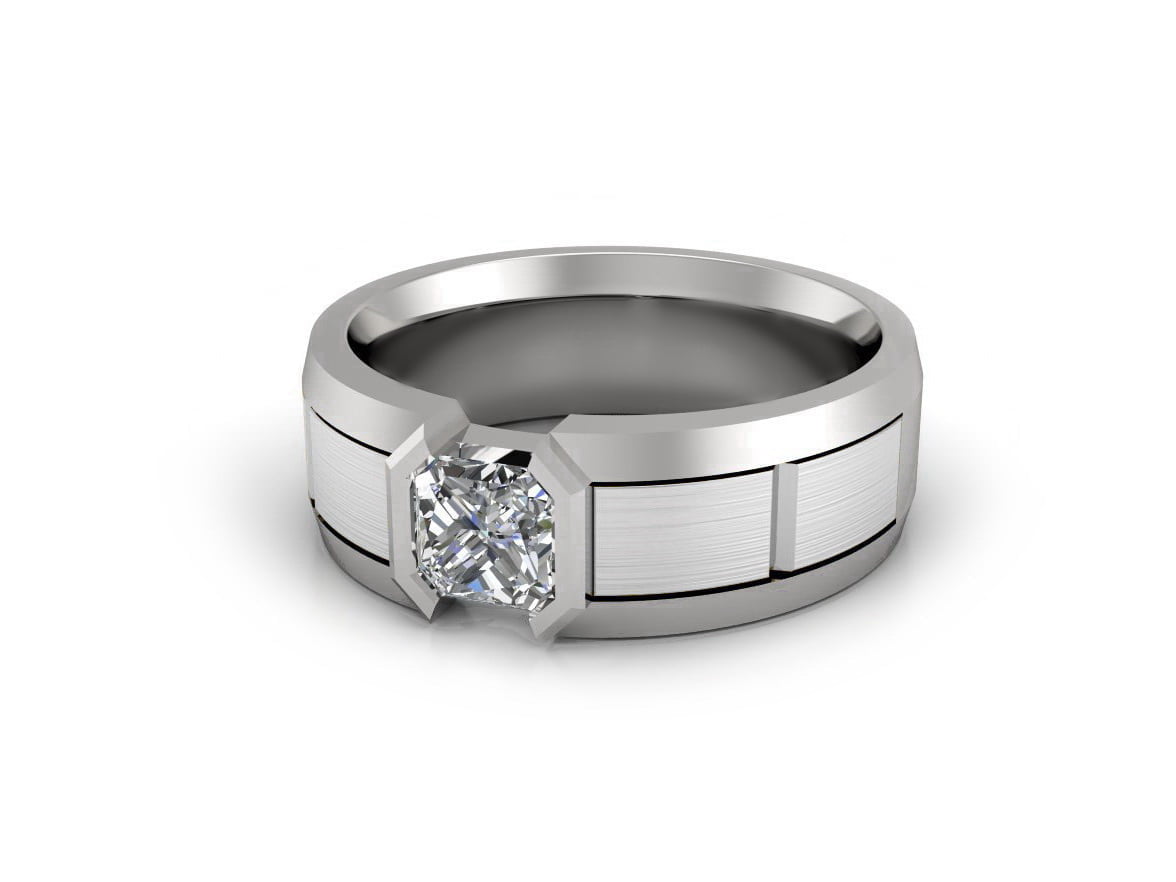
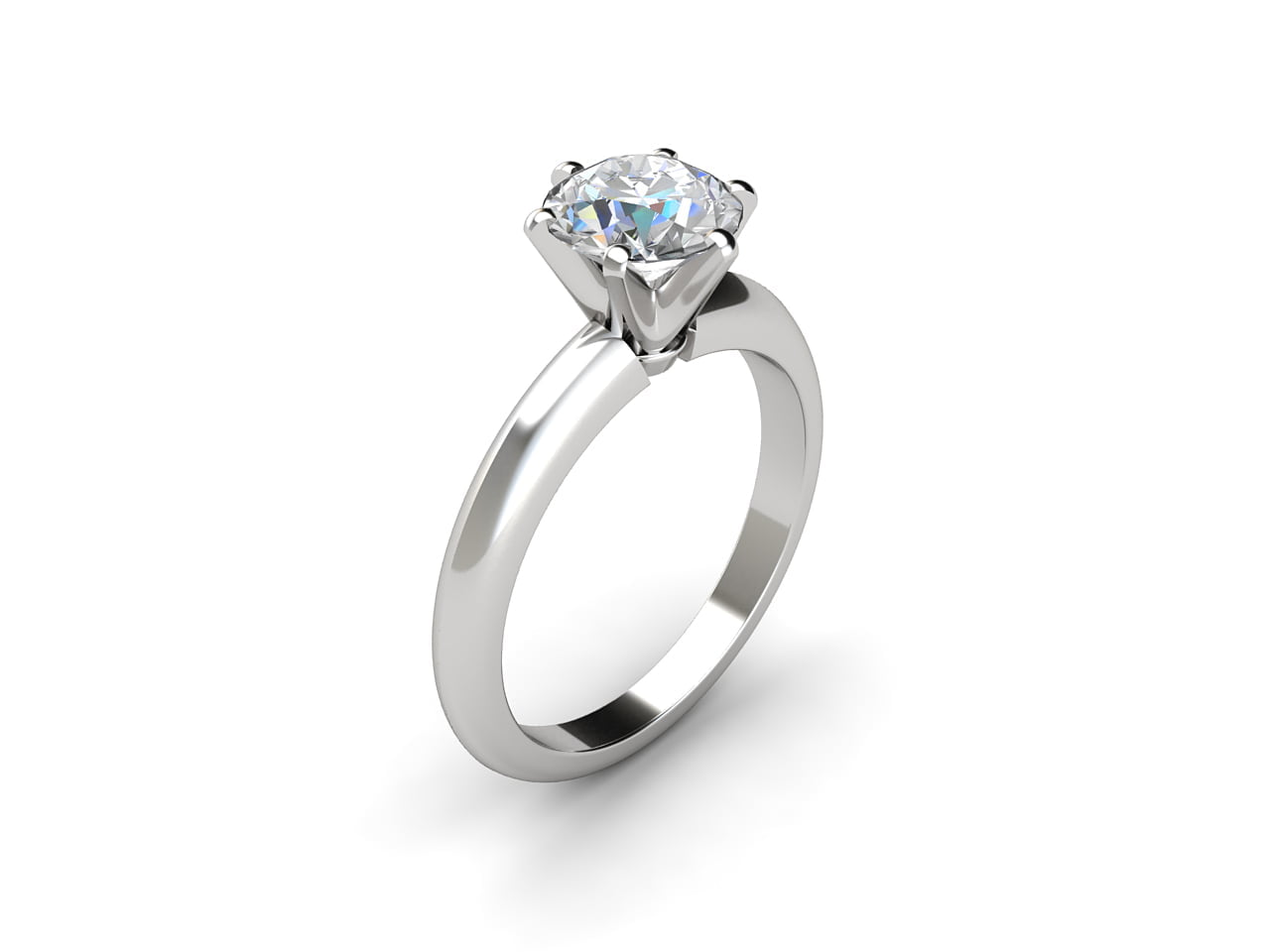
That is why this decision should never happen in isolation. The diamond and the design need to work together. The shape of the stone, the width of the band, the height of the setting and the metal colour all influence the final result.
Emotional value and personal meaning
An engagement ring is rarely a purely rational purchase. People bring family history, sentiment and symbolism into the process, and that often shapes the choice more than spreadsheets ever will.
For some, a natural diamond carries a sense of permanence that feels right for a once-in-a-lifetime piece. The idea that it formed over an immense time can make it feel poetic and irreplaceable. If your vision of an engagement ring is tied to tradition, legacy or heirloom value, a natural stone may resonate more strongly.
For others, a lab diamond represents a modern expression of love. It offers beauty without the same cost barrier and can feel like a smart, contemporary choice for couples building a life together. If you want your budget to go further while still creating something personal and luxurious, that can be a meaningful decision too.
There is no universal romantic answer here. Meaning is created by the people wearing the ring, not by a rulebook.
Lab diamond vs natural for long-term value
This is the area where honest guidance matters most. If by value you mean visual impact for your budget, lab diamonds usually offer very strong value. If by value you mean rarity and market perception over time, natural diamonds have traditionally held a different position.
Resale is often misunderstood. Most jewellery, whether set with lab or natural diamonds, should be bought primarily for wearing and keeping, not as a short-term financial asset. Retail prices, wholesale realities and second-hand demand are not the same thing.
Natural diamonds may retain stronger resale interest due to their rarity and established demand, but that does not mean every natural diamond performs well in every resale setting. Lab diamonds have become more accessible, and that has affected pricing expectations in the broader market.
So if long-term investment potential is your main concern, ask direct questions and keep your expectations realistic. If your priority is creating the most beautiful custom ring within a set budget, the answer may look very different.
Ethics, sustainability and what buyers should ask
Many people begin this comparison by thinking about ethics or environmental impact. That is a valid place to start, but it is worth avoiding simple marketing claims.
Lab diamonds are often chosen by buyers who prefer an alternative to mining. Natural diamonds, on the other hand, can come with traceability and sourcing standards that matter greatly when selected carefully. Neither category should be reduced to a slogan.
The more useful approach is to ask where the diamond comes from, how it was sourced or produced, and whether the jeweller is transparent in the way they explain it. Clear answers matter more than polished language.
In bespoke jewellery, this transparency matters because the ring is being made to represent something deeply personal. Clients deserve to feel comfortable not only with how the piece looks, but with the decisions behind it.
Which option suits your ring design?
Some designs naturally benefit from the budget freedom a lab diamond provides. A larger oval, radiant, or emerald-cut centre stone can dramatically change the character of a ring. If that scale is important to you, lab may open up options that feel out of reach with natural.
On the other hand, if your design leans toward understated elegance, you may prefer a smaller natural diamond in a beautifully resolved setting. A refined solitaire, a detailed trilogy ring, or a handcrafted vintage-inspired design can be breathtaking without relying on maximum size.
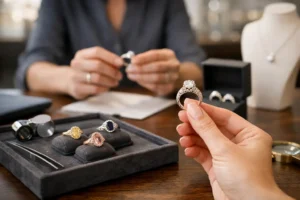
This is where custom design becomes so valuable. Instead of forcing your choice into a standard retail template, the ring can be shaped around your priorities. At Joseph George, that often means guiding clients through stone selection alongside metal choice, proportions, setting style and wearability so the final piece feels considered from every angle.
How to decide with confidence
If you are weighing up lab diamond vs natural, start with three questions. What matters most to you emotionally? Where do you want your budget to work hardest? And how do you want the finished ring to feel every time you look at it?
If rarity, tradition and the idea of a naturally formed stone matter most, natural may be the right fit. If size, design flexibility and pricing are higher on your list, the lab may be the more practical and satisfying choice.
Most importantly, give yourself permission to choose without apology. You do not need to justify a natural diamond as old-fashioned, and you do not need to defend a lab diamond as lesser. The best rings are not built around other people’s opinions. They are built around the person who will wear them and the story they are meant to hold.
A thoughtful jeweller will help you clearly compare the two options, show you where the real differences lie, and ensure the diamond you choose belongs in a piece worthy of the moment. When the stone, design and sentiment align, that is when a ring truly feels like yours.